

A video by Cybersecurity Girl, real name Caitlin Sarian, has hundreds of thousands of likes on TikTok. In it, she shows a simple test. If you are on a video call and you are not sure the person on the screen is real, ask them to hold up three fingers in front of their face. If the face glitches, warps or breaks apart around the hand, you are looking at a deepfake. If it stays clean, the person is real.
It is a brilliant idea for a video. It is simple, it is visual, and anyone can do it in seconds. That is why it went viral. The problem is that the test is no longer reliable, and trusting it alone can make you less safe, not more safe.
This guide explains how the test works, why it used to work, why newer deepfakes pass it, and what to do instead when a video call asks you for money, a password, or a secret.
What Is Actually Happening
A deepfake is audio or video that AI has made or changed, so a real person appears to say or do something they never did. On a live video call, a scammer can use a deepfake to wear someone else’s face in real time. The scammer sits in front of a camera, and software replaces their face with the face of your boss, your relative, or a company executive, and matches the mouth movements to a cloned voice. To you, it looks like a normal call.
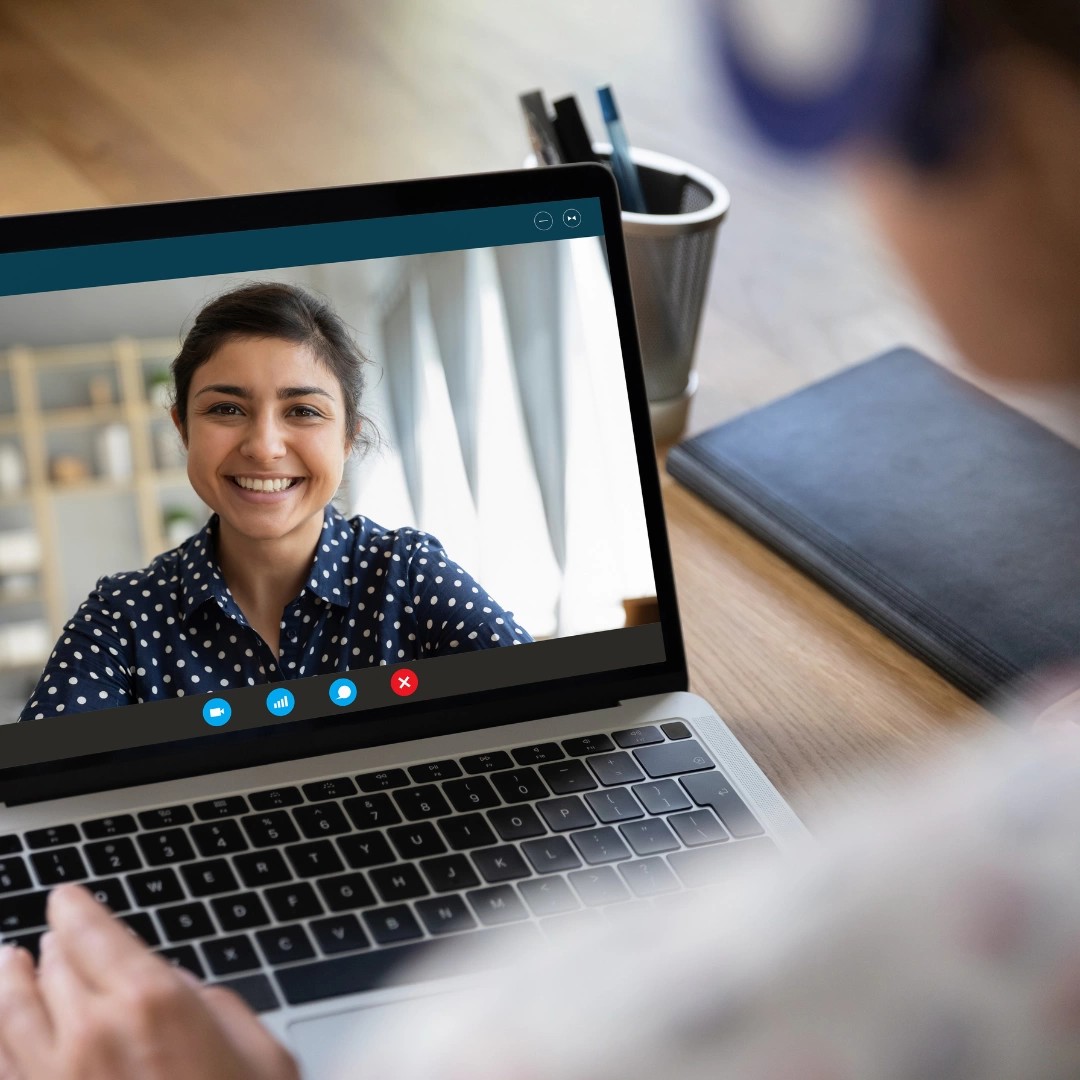
The 3-Finger Test tries to break that trick. It works on a weakness called occlusion. Occlusion means one thing blocking another thing. When a hand moves in front of a face, the software has to work out what is hand and what is face, and redraw the face around the hand, in real time, frame after frame. Early deepfake systems were bad at this. They lost track of the face when a hand covered part of it, so the image glitched, the fingers bent in strange ways, or the face broke apart for a moment. That glitch was the giveaway.
The test went viral because the footage behind it was striking. The original footage came from Huntress Labs, a cybersecurity company, which showed a live deepfake breaking apart when a hand moved across the face. Cybersecurity Girl shared it on TikTok, where the video has drawn around 364,000 likes. For many people, it was the first time they had seen a live deepfake fail in front of them.
The test also arrived at a moment when deepfake scams were already real in Ghana. In May 2026, the Cyber Security Authority’s Cyber and Electronic Evidence Team arrested people for AI deepfake videos impersonating President John Dramani Mahama, weeks after Ghana launched its National AI Strategy. In 2024, scammers cloned the voice of broadcaster Bernard Avle to sell a product. Our guide If You Saw the President Ask for Money, Would You Believe It? explains those cases in full. The 3-Finger Test speaks to the same fear: if you cannot trust a face on a screen, what can you trust?
Why This Is Different
Most advice about deepfakes tells you to look closely. Look at the blinking, look at the hands, look at the shadows. The 3-Finger Test is different, because it does not ask you to look closely. It asks you to do something, to make the person on the call perform a movement that should break a fake. That is why people loved it. It felt like a test you could run, not a feeling you had to trust.

But that is also why its failure matters more. A test that feels certain is dangerous when it stops working. If you run the test, the face stays clean, and you conclude the person is real, you may then do what they ask: send money, share a code, or open a system. The test has not proved the person is real. It has only proved that this particular fake can handle a hand moving across a face.
Experts now say this plainly. Reporting by Cybernews in 2026 quotes Ben Colman of Reality Defender, a deepfake detection company, saying real time deepfake models have improved around the occlusion weakness. Manny Ahmed of OpenOrigins warned in the same reporting that relying on the gesture can create dangerous false confidence. Cybernews described the method as potentially essentially useless against better systems. That is expert commentary on the limits of the test, not a formal accuracy score, but the direction is clear. Newer systems handle hands better, and they keep getting better, because every viral test becomes a checklist for the people building the fakes.
There is a second reason the test is different from a real security check. A glitch does not prove a crime, and a clean result does not prove a person is real. A real person on a bad connection, with poor lighting, or with a phone filter turned on, can glitch too. A scammer with a good tool, good lighting and a slow, careful hand movement can pass. The test catches weak fakes, and it can wrongly suspect real people. It is a prompt, not a verdict.
Who Is at Risk
Anyone who takes instructions on a video call is at risk, but some people are targeted more than others.
Workers in finance, human resources and IT are prime targets. A scammer who can impersonate a chief executive on a video call can ask a finance officer to move money, urgently, before the end of the day. There are documented cases around the world where employees were fooled into sending large transfers in exactly this way. The call feels real because the face and the voice are familiar, and the urgency stops the worker from checking.
Family members are targeted too. A scammer calls as a relative in trouble, on video, asking for money to be sent at once. The face looks right, the voice sounds right, and the emotion feels real. Older relatives, and relatives who live far from the person being impersonated, are easier to fool, because they have less recent contact to compare against.
Job seekers and small business owners face a third version. A fake recruiter or a fake buyer appears on a video call, builds trust with a face that looks professional, and then asks for a fee, a code, or access to an account. The video call is the trust builder. The request that follows is the scam.
In Ghana, the risk is sharpened by how much business now happens on WhatsApp video calls. A video call feels more personal than a text, and more trustworthy than an email. That trust is exactly what a deepfake exploits.
What Ghanaian Law Says
There is no law in Ghana that names the 3-Finger Test, and no law that says a video call is proof of identity. What the law does say is about the scam itself, not the test.
The Cybersecurity Act 2020, Act 1038, set up the Cyber Security Authority and gives it powers over cybercrime, including fraud and impersonation online. If someone uses a deepfake to impersonate another person and steal money, that is fraud, and it can be reported to the Authority. The Authority’s reporting channels are call 292, WhatsApp 0501603111, and email report@csa.gov.gh. Use the hub page Scams in Ghana: The Complete Guide for the reporting steps.
The Data Protection Act 2012, Act 843, protects personal data, including your image and your voice. Using someone’s face or voice without permission to make a deepfake can break that law, as well as the fraud laws.
Ghana has no dedicated AI law. Our guide Does Ghana Have an AI Law? explains what actually applies in 2026. The National AI Strategy, launched on 24 April 2026, is a policy, not a law. It promises a Responsible AI Office, but it does not by itself make deepfakes illegal. The existing fraud and data protection laws are the ones that apply today.
What to Actually Do: A Checklist
Do not throw the 3-Finger Test away. Use it as a first prompt, and then do the checks that actually prove who you are talking to. If a call asks for money, a password, a code, or access to a system, treat it as unproven until you have checked it another way.
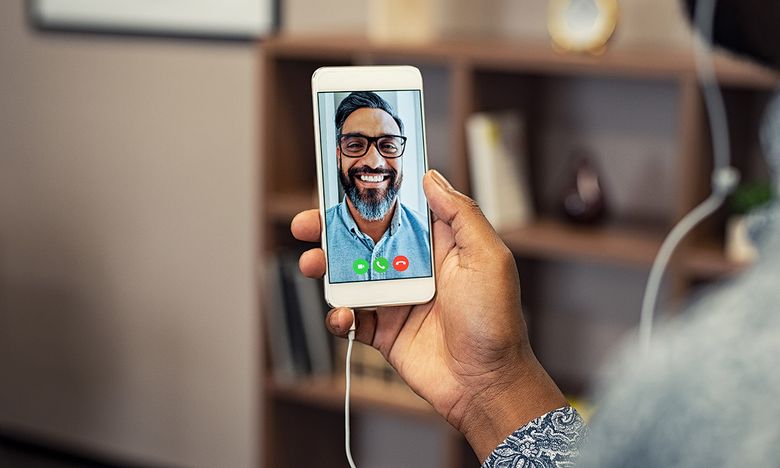
- Try the test, but do not stop there. Ask the person to hold three fingers in front of their face, and to move their hand slowly across it. If the face glitches badly, end the call and check another way. If it stays clean, that tells you nothing on its own. Keep going.
- Ask for something unpredictable, twice. Ask them to turn their head to one side, then to the other, and to describe what changed in the room behind them. Ask them to hold a sheet of paper over half their face, or to touch their nose with the other hand. A fake that is ready for three fingers may not be ready for a second, unplanned movement. A real person will do it without thinking.
- Agree a safe word in advance with the people who might call you in an emergency. Pick a word only your family or your team knows, and never share it on a call you did not start. On a suspicious call, ask for the safe word. A scammer will not know it.
- Call the person back on a number you already have. This is the strongest check, and it is the one experts recommend most. End the video call. Call the person on the number saved in your phone, not on a number the caller gives you in the chat. If they are real, they will answer, or call you back. If they refuse to be called back, or they say their phone is broken, treat the call as fake.
- Check the request, not the face. Even if the face looks real, ask yourself whether the request makes sense. Would your boss really ask for a transfer on a video call, with no email and no paperwork? Would your relative really ask for money to be sent to a new number, with no time to check? If the request is urgent, secret, and hard to check, that is the scam, whatever the face looks like.
- If you have already sent money or shared a code, act at once. Call your bank or your mobile money provider and ask them to stop the payment. Save the evidence: screenshots, the number, the time of the call, and what was asked for. Report it to the Cyber Security Authority on 292, on WhatsApp 0501603111, or by email to report@csa.gov.gh. Change your passwords, and warn the people the scammer may contact next.
Conclusion
The 3-Finger Test is a good idea that time has overtaken. It can still catch a weak deepfake, and it is worth trying, because it costs nothing and it takes seconds. But it cannot prove a person is real, and a clean result should never be the reason you send money or share a secret.
The real protection is not a trick. It is a habit: verify the person another way, on a number you already have, and verify the request on its own merits. A face on a screen is no longer proof of identity. A call back on a known number, and a safe word agreed in advance, still are.
Learn the test, use it as a prompt, and then do the check that actually works. That is how you stay safe when the fake looks real.
Sources
- Cybersecurity Girl, TikTok, The 3-Finger Test That Exposes Deepfake Scammers Instantly, original footage from Huntress Labs, around 364,000 likes, https://www.tiktok.com/@cybersecuritygirl/video/7622725746217258253
- Cybernews reporting, 2026, on the limits of the 3-Finger Test, quoting Ben Colman of Reality Defender and Manny Ahmed of OpenOrigins, newer real time models have improved around the occlusion weakness, relying on the gesture can create dangerous false confidence.
- iTechGuides, The Three-Finger Method to Detect Deepfakes: Does It Work in 2026?, a clean result does not prove the caller is genuine, a glitch does not prove criminal intent, use it only as a prompt for independent verification.
- Perusee, The truth behind the 3 finger test, 12 April 2026, newer deepfake systems render hands and facial interactions in real time with far greater accuracy, the test should not be used as a primary verification method.
- Azar Consulting, The Three Finger Deepfake Test Is Dead, modern tools are better at handling occlusion, facial tracking and motion smoothing, a person on a video call can pass the test and still be fake.
- Onescholar, If You Saw the President Ask for Money, Would You Believe It? Ghana’s New AI Deepfake Scam Problem, https://onescholar.org/if-you-saw-the-president-ask-for-money-would-you-believe-it-ghanas-new-ai-deepfake-scam-problem/
- Onescholar, Does Ghana Have an AI Law? No, Here Is What Actually Applies in 2026, https://onescholar.org/does-ghana-have-an-ai-law/
- Onescholar, Scams in Ghana: The Complete Guide, https://onescholar.org/scams-in-ghana
- Cyber Security Authority, reporting channels: call 292, WhatsApp 0501603111, email report@csa.gov.gh. Cybersecurity Act 2020, Act 1038. Data Protection Act 2012, Act 843.
