

Search your own name on Google, and you may get a shock. Your full name, your home address, your date of birth and your phone number can all be there, on a page you never made, run by a company you have never heard of. Anyone can see it. Anyone can buy it.
That is the point of a video by Cybersecurity Girl, real name Caitlin Sarian, that has 86,000 likes on TikTok. She shows her own details sitting on the internet for anyone to see, and then she shows how to get them removed. Her message is simple. Your personal data is for sale, and you can ask for it to be taken down.
This guide does the same thing, in full. It explains who is selling your data, how to find your listings, how to ask for them to be removed, and what you cannot delete, no matter who you ask.
What Is Actually Happening
Companies called data brokers collect your personal details and sell them. They get the details from public records, from voter lists, from property records, from court records, from shopping and loyalty schemes, and from other brokers. They put the details together into one profile, your name, your address now and in the past, your phone numbers, your age, your relatives, sometimes your job and your income band, and they sell that profile to anyone who pays. Some of them show the profile in a free search, and charge for the full version.
There are thousands of these companies. Guides that count them put the number at over 4,000 around the world. You cannot opt out of all of them. But a small number of them matter most, because they are the ones that show up at the top when someone searches your name. The names most people run into are Spokeo, Whitepages, BeenVerified, Intelius, Radaris, MyLife, PeopleFinders, TruePeopleSearch and Instant Checkmate.

The scale of the problem is easy to see in the breach numbers. Have I Been Pwned, a free service run by security researcher Troy Hunt since 2013, keeps a list of known data breaches. As of October 2026, it listed more than 1,000 breached websites and about 17.8 billion breached accounts. That does not mean your data was sold by a broker. It means your email address has probably appeared in at least one breach, and the details from those breaches feed the same trade.
Here is the honest limit, and it matters more than any other fact in this post. Deleting your listings does not delete the public records underneath them. Your property record, your voter registration and a court record stay public where the law keeps them public. What you are removing is the easy, searchable profile that puts all of it together on one page. Think of it as closing the front door, not rebuilding the house.
Why This Is Different
Most privacy advice tells you to change your password and move on. This is different, because the risk is not only your password. When your address and phone number are easy to find, a scammer does not need to hack you. They can call you by name, quote your address, and sound like someone who already knows you. That is how the impersonation calls and the fake delivery messages work. Our guide to how mobile money fraud actually works in Ghana shows the same pattern. The scammer starts with details that feel private, and the victim trusts them because of it.
The second difference is that removal is a job you do, not a product you buy once. Brokers buy new data all the time, so they can put your profile back up months after you removed it. Guides that have done this work say to expect your details to come back within three to six months on some sites, and to repeat the check every few months. A service that promises to delete you from the internet for good is not being honest with you.
The third difference is that doing it yourself works better than paying for it, at least on the evidence we have. Consumer Reports tested seven paid removal services in 2024, with 32 volunteers and 13 people search sites. After four months, the paid services had removed between 4 percent and 68 percent of the profiles, and 35 percent of all the profiles they tracked. The researchers who opted out by hand removed about 70 percent. That study was small, it covered only 13 sites, and the services have changed since 2023, when the data was collected. But it is the only independent test we have, and its message is clear. You do not need to pay to get most of this done.
Who Is at Risk
Everyone who has ever filled in a form is at risk, but some people are more exposed than others.
If you have ever registered to vote, bought property, or taken a loan, your name and address are in a public record somewhere. If you have an old email address that you still use for password resets, that address is probably in a breach. If you use the same password on many sites, one breach opens all of them.
Young people are a special case. They are online more, they sign up for more apps, and they reuse the same password everywhere. When one app leaks that password, every account that shares it falls. That is a theme Cybersecurity Girl returns to often, and it is one reason her videos reach young viewers first.
People in Ghana face the same trade, with one difference. The big people search sites are mostly American, and they hold far less detail on a Ghanaian address than on an American one. But a Ghanaian phone number and email address still appear in breaches, and Ghanaian names still appear on social media, on old accounts, and on sites that scrape the web. The steps below work in Ghana too, and the Ghana law section at the end gives you a right to ask a Ghanaian company to delete your data.
How to Delete Your Data, Step by Step
Do this in order. The first three steps are free and take the least time, and they give you the biggest result.

Step 1. Search for yourself first
Search your full name in Google, in quote marks, with your city. Then search your name with your phone number, and your name with your email address. Note which sites show your details, and copy the link to each profile. You need the exact profile link for the opt out form, not just your name.
While you are there, check your social media. Set old posts to friends only, remove your phone number and your date of birth from public profiles, and delete accounts you no longer use. An account you forgot about is still a source of data.
Step 2. Check if your email was in a breach
Go to haveibeenpwned.com. Type the address yourself into your browser, do not click a link in an email to get there. Enter your email address and check it. The site will list the breaches your address appeared in, and what kind of data each breach exposed.
If your email appears in a breach, change the password on that account, and on every other account that used the same password. Turn on two factor authentication on your email account first, because your email is the key to resetting every other password. Our guide to five phone and app settings most people never turn on explains two factor authentication in simple words.
Do this for every email address you use, including old ones that still receive password resets. Do not type your password into a breach checker site. Have I Been Pwned only asks for your email address, and its separate password check works without sending your full password to the site. A checker that asks for your email address and your password together is not a real checker.
Step 3. Ask Google to remove results that show your contact details
Google has a free tool called Results about you. Open it from your Google account, or go to myactivity.google.com/results-about-you, and add the contact details you want it to watch, your phone number, your home address and your email address. It finds search results that show those details, and it lets you ask for them to be removed. It can also alert you when new results appear.
Two limits to know. Removing a result from Google Search does not remove the page from the internet. The page still exists on the broker site, so you still need to opt out there. And Google will not remove results it sees as valuable to the public, such as government pages, news reports, and business listings. That is Google’s own rule, stated on its help page.
Step 4. Opt out of the big people search sites, one by one
This is the main work. It takes two to four hours for a first pass across the big sites, and each site has its own form. Do the ones that show up in your search first. These are the current opt out routes, checked on 19 November 2026.
Whitepages. Find your listing on whitepages.com, copy the profile link, then go to whitepages.com/suppression-requests, paste the link, and complete the phone check it asks for. Removal usually shows within about a day once it is checked.
Spokeo. Go to spokeo.com/optout, search for your profile, copy the profile link, paste it into the form with your email address, and click the confirmation link Spokeo sends you. Listings usually clear within one to three days.
MyLife. MyLife has no simple web form for many users. The reliable route is to email its privacy address with your full name, your current city, and a clear deletion request, with any listing links you found. Expect it to take longer than the others.
BeenVerified, Intelius, Radaris, PeopleFinders and TruePeopleSearch. Each one has an opt out or privacy page on its own site. Search for the site name plus opt out, use the official page, and follow the same pattern. Find your listing, copy the link, submit the form, and click the confirmation email. Keep a note of the date you submitted each one, and check back after a week to see if the profile is gone.
A warning for this step. The opt out form will ask you for personal details to prove the profile is yours. Give only what the form needs, and use an email address you check often. Never pay to opt out. Every major broker must offer a free opt out, and a site that charges you to remove your own listing is not following that rule.
Step 5. Ask the companies you actually deal with
The brokers are only half the story. The apps and shops you use hold your data too. Delete old shopping accounts, old loyalty accounts, and old apps you no longer open. In each app you keep, open the privacy settings and turn off location history, turn off ad tracking where the app allows it, and remove access for apps you no longer use. Our guide to what actually happens when you click accept all cookies explains why those settings matter, and our guide to what a VPN actually protects you from explains what a VPN does and does not do about tracking.
If a company in Ghana holds your data, you have a right to ask for it to be deleted. That is in the next section.
Step 6. Decide about paid removal services, with the facts in front of you
Paid services, such as DeleteMe, Optery, Kanary and Incogni, file opt out requests for you and repeat them over time. They charge a yearly fee, and they cover hundreds of sites. They are useful if you have no time to file the requests yourself, or if you want someone to repeat the work every few months.
But read the Consumer Reports result again before you pay. In that 2024 test, manual opt outs removed about 70 percent of the profiles, and the best paid service removed 68 percent. The worst paid service removed only 4 percent. No service removed everything. And the test was small, with only four people in the manual group, so do not treat 70 percent as a promise. The fair summary is this. A paid service saves you time, but it does not guarantee a better result than doing it yourself.
Cybersecurity Girl lists a privacy protection tool on her resources page at cybersecuritygirl.com/resources. That page is a useful starting point if you want to compare tools, but do not pay for any tool before you have done the free steps above. The free steps remove most of what a paid service would remove.
What Ghanaian Law Says
Ghana has a data protection law, the Data Protection Act, 2012, Act 843. It gives you rights over your own personal data, including a right to ask for your data to be corrected, blocked, erased or destroyed when it is no longer needed, when you withdraw your consent, or when it was processed unlawfully. That right is in Section 33 and Section 44 of the Act, and it is a qualified right, not an absolute one. A company can refuse if it has a legal reason to keep the data, such as a tax record or a court order.
The Act also says an organisation must respond to your request within 21 days, under Section 39(2). If it refuses, it must say why, and tell you that you can complain to the Data Protection Commission. The Commission is the regulator, and it can order a company to correct, block, erase or destroy your data after a complaint.
That law covers companies that process your data in Ghana. It does not directly force an American people search site to delete a profile, because that site is not in Ghana. For those sites, use their own opt out forms in Step 4. For a Ghanaian company, a bank, a telecom company, a shop, or an app that operates in Ghana, write to the company first, cite Act 843, and ask for erasure. If it refuses or ignores you, complain to the Data Protection Commission.
What to Actually Do: A Checklist
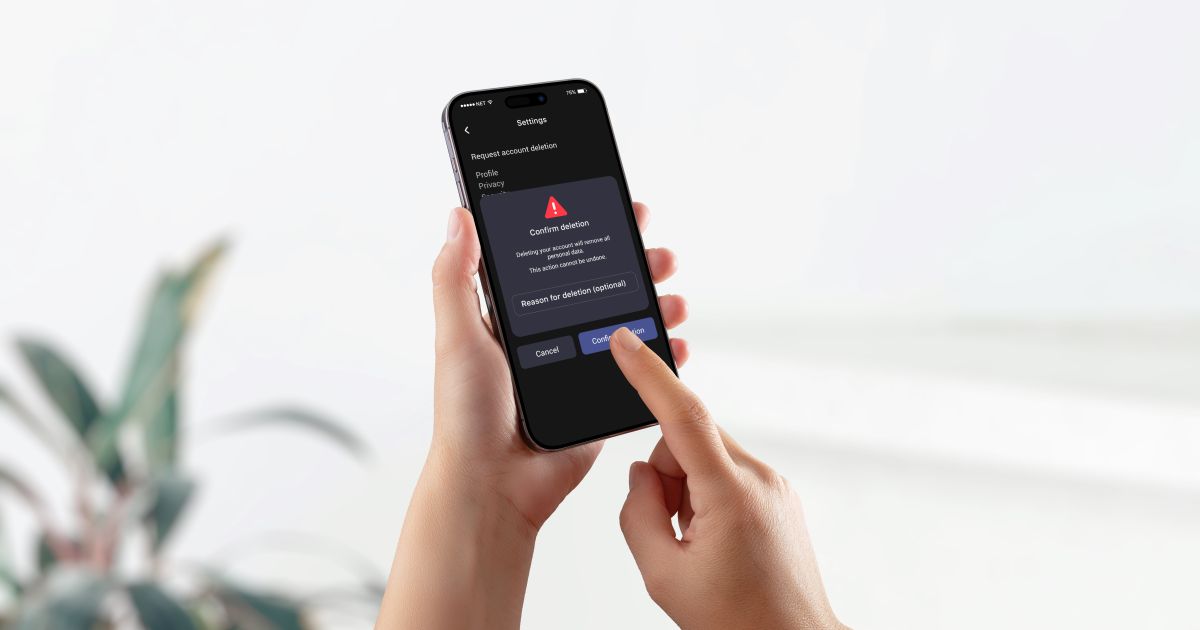
- Search your name, your phone number and your email address, and note every site that shows your details.
- Check every email address you use on haveibeenpwned.com, and change the password on any account that appears in a breach.
- Turn on two factor authentication on your email account first, then on your bank and social media accounts.
- Use Google Results about you to ask for search results that show your phone number, home address or email address to be removed.
- Opt out of Whitepages, Spokeo and MyLife first, then the other people search sites that show your profile.
- Delete old accounts you no longer use, and tighten the privacy settings on the accounts you keep.
- Never pay to opt out, never give your password to a checker site, and never pay a stranger who offers to delete your data for you.
- Repeat the search every few months, because brokers buy new data and can put your profile back up.
Conclusion
Your personal data is for sale, and most people only learn that when they search their own name. The fix is not one click, and no service can delete you from the internet for good. But the work is free, it is mostly simple, and it works. Search for yourself, check your email against known breaches, ask Google to remove the results that show your contact details, and opt out of the big people search sites one by one. Then do it again in a few months, because the brokers will try again.
That is the lesson of Cybersecurity Girl’s video, and it is why it has 86,000 likes. People do not need a technical lecture. They need to know their data is out there, and they need the steps to take it down.
Sources
- Cybersecurity Girl, TikTok, @cybersecuritygirl. Video: “Did you know that your name, home address, date of birth and phone number are all online for everyone to see? Here is how to delete your personal information from the internet.” 86,000 likes. https://www.tiktok.com/@cybersecuritygirl
- Cybersecurity Girl, resources page, privacy protection tool listed under “Get your personal data off the internet.” Checked 19 Nov 2026. https://cybersecuritygirl.com/resources
- Aura, How To Remove Yourself From Data Broker Sites in 2026. Spokeo opt out at spokeo.com/optout, Whitepages suppression requests at whitepages.com/suppression-requests, MyLife deletion only for residents of states with privacy laws, data brokers re-add information after the next data purchase, California Delete Request and Opt-Out Platform. https://www.aura.com/learn/how-to-remove-yourself-from-data-broker-sites
- TechWalla, How to Remove Yourself From Data Broker Sites for Free. Spokeo, Whitepages, BeenVerified, Intelius, Radaris and MyLife named as the most visible people search sites, removals typically process within 24 to 72 hours and may take up to 30 days, Google Results about you at myaccount.google.com/data-and-privacy. https://www.techwalla.com/13779310/how-to-remove-yourself-from-data-broker-sites-for-free
- Privacy Terminal, Data Broker Opt-Out Guide. Over 4,000 data brokers globally, manual opt out of the top 20 to 30 brokers takes about 3 to 5 hours, brokers re-list after removal, California Delete Act. https://privacyterminal.com/guides/data-broker-opt-out/
- Google Search Help, Find and remove personal info in Google Search results. Results about you finds personal contact details in search results, removal from search does not remove the page from the internet, Google will not remove information it sees as valuable to the public. https://support.google.com/websearch/answer/12719076
- Have I Been Pwned, run by Troy Hunt since 2013. As of October 2026, more than 1,000 breached websites and about 17.8 billion breached accounts, as reported in October 2026 summaries of the service. https://haveibeenpwned.com
- Consumer Reports, Data Defense: Evaluating People-Search Site Removal Services, published August 2024, data collected May to September 2023. 32 volunteers, 13 people search sites, seven paid services. Manual opt outs removed about 70 percent of profiles, paid services removed between 4 percent and 68 percent, 35 percent of all tracked profiles removed. Sample small and not statistically significant, volunteers gave only basic details and did not answer follow up questions. As summarised in 2026 reviews of the study.
- Institute of ICT Professionals Ghana, Data Protection Rights Under Act 843. Right to erasure under Section 33(1)(b), qualified not absolute, organisations must respond to requests within 21 days under Section 39(2), right to complain to the Data Protection Commission under Section 41. https://iipgh.org/data-protection-rights-under-act-843/
- Data Protection Act, 2012 (Act 843), Sections 33, 39, 41 and 44. Right to rectification, blocking, erasure and destruction of personal data, and Commission ordered correction or erasure after a complaint. https://legal.ghanainfocentre.com/index.php?title=Data_Protection_Act,_2012_(Act_843)
