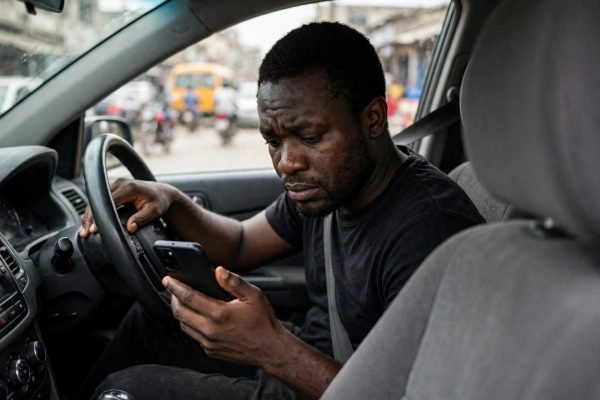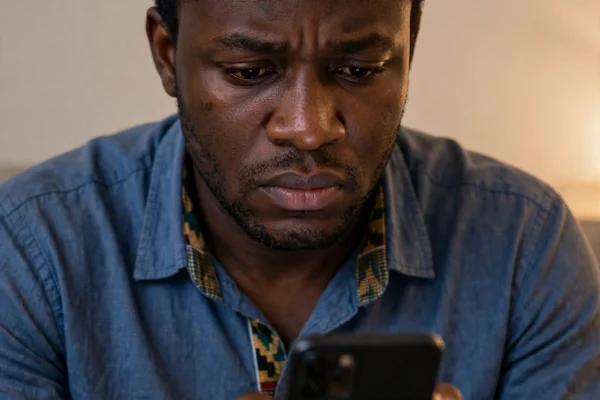

A post on Facebook or WhatsApp promises to double your money in a week. It shows screenshots of people who paid and got paid back, with interest. It gives you a link, and a mobile money number to send to. You send a small amount first, to test it. A few days later, a small profit lands in your account. So you send more. Then the messages stop, the group goes quiet, and the money is gone.
That is not a bad investment. It is a scam, and it happened to hundreds of people in Ghana in the first half of this year.
Ghana’s Cyber Security Authority, known as the CSA, recorded 352 cases of online investment fraud between January and June 2026. Victims lost GH₵3,429,447 between them, about GH₵3.4 million. The CSA issued a public alert about it on 6 July 2026. Later that month, on 22 July 2026, the Securities and Exchange Commission, known as the SEC, named 23 entities offering investment products online and on social media without a licence.
This article explains how these schemes work, who is at risk, what Ghanaian law says, and what to check before you send any money.
What Is Actually Happening
The schemes start where people already spend their time: Facebook, WhatsApp, Telegram, and TikTok. The ad or post promises unusually high returns, often in days or weeks, for a small deposit. Some say you are investing in online trading, crypto, or a digital business. Others say you are leasing crypto mining equipment, or doing simple online tasks for daily pay. The exact story changes. The promise does not.
The CSA said the scammers often pretend to be a real business. One example in its July alert was Darazz, a name close to Daraz, a real e-commerce company. Other names the CSA listed were Daily Trade, Ghstore, KUKA, and Edollar. The scammers change names often, so a list of names is never complete. A name that is not on any warning list can still be a scam.
The small payout that builds trust
Most victims do not lose money on the first payment. The scheme pays a small profit on the first deposit, on time. That payout is the trick. It makes the scheme look real, and it makes the victim trust it enough to send a larger amount. Friends and family see the payout too, and they join in.
The CSA put it simply: once the larger funds are transferred, victims neither receive any returns nor recover their initial investment. The platform stops paying, the people behind it disappear, and the group or page is closed or renamed. The same scheme can return a week later under a new name, with new screenshots and new victims.

The SEC list
On 22 July 2026, the SEC published a public notice, reference SEC/PN/002/07/2026, listing 23 entities it said were operating without a licence. The list included Yepbit Trading, BonChat, BG Wealth, QX Broker, also called Qumatix, ZEC ZEC FX, Ultima Cryptocurrency Group, Creative Walker Promotion Company, known as CWPC, and Ghana Vest. The SEC said it was working with law enforcement to identify the people behind the schemes, and it warned the public not to invest with these entities.
In October 2026, the SEC warned again, this time about schemes promising returns of 30 percent or more per month, using polished adverts, fake testimonials, and AI generated videos. Its Director General, James Klutse Avedzi, said people should verify the credentials of an investment firm before committing money, and that a professional looking advert is never proof that a firm is genuine.
Why This Is Different
Investment scams are not new in Ghana, but three things make this wave harder to spot than the old ones.
First, the adverts look professional. A scheme can buy a clean website, a logo, a video of a smiling person, and dozens of comments from people who say they were paid. Some of those videos are now made with AI, so the person in the video may not exist at all. A neat advert used to be a sign of a real company. It no longer is.
Second, the payout is real, at first. In older scams, the victim paid and heard nothing. Here, the victim is paid, so the doubt goes away. The small profit is not a return on an investment. It is money taken from new joiners, paid to earlier joiners to keep them quiet and to bring in more people. When new money slows down, the payments stop.
Third, the payment channel is familiar. The victim pays by mobile money, to a personal number or a wallet, not to a company bank account. That feels normal in Ghana, because mobile money is how most people pay for most things. But a licensed investment firm does not collect investments through a personal mobile money wallet. That detail is one of the clearest warning signs, and it is easy to miss when the advert looks convincing.
The same trust is used in other scams we have covered. In our guide to mobile money fraud in Ghana, we explain how scammers use a familiar channel to get people to act before they check. The deepfake scam works the same way, a familiar face makes a false promise feel true, as we explain in our article about the deepfake president videos.
Who Is Actually at Risk
Anyone with a phone and some savings is at risk, because the adverts are aimed at everyone. But some people are reached more often, and some lose more when they are caught.
Young people looking for extra income are a main target. A student, a new graduate, or a young worker who wants to earn from a phone will see these adverts every day. The promise of daily profit fits the way they already use their phones, and a small first deposit feels affordable.
Small traders and market women are also targeted, because they often have cash they want to grow, and they may not have a bank account that offers investment products. A scheme that accepts mobile money and promises weekly returns feels easier than a bank.

Workers who have just received a salary, a bonus, or a lump sum are at risk too. A scheme that promises 30 percent a month sounds like a way to make that money work harder, especially when prices are rising. That is when the pressure to decide fast is strongest.
Retired people, and people saving for a specific goal such as school fees or a house, can lose the most, because the money they send is money they cannot replace. No one should put money they cannot afford to lose into any online scheme, and no one should borrow money to invest in one.
What Ghanaian Law Says
Ghana has laws that cover this kind of fraud, even though no single law is called the investment scam law.
The Securities Industry Act, 2016, known as Act 929, says a person must be licensed by the SEC before offering investment products or carrying out capital market activities in Ghana. The SEC’s July 2026 notice was issued under that law. An entity on that list is not licensed, and the SEC has warned the public not to invest with it. The SEC also issued a directive in June 2026 requiring online investment and trading platforms to register with the Commission by 31 August 2026.
The Cybersecurity Act, 2020, known as Act 1038, set up the Cyber Security Authority and gives Ghana a framework for dealing with cybercrime, which is a broad term for crimes committed using a computer, a phone, or the internet. Running a fake investment platform online falls under that framework.
Fraud by false pretences is also an offence under Ghana’s Criminal Offences Act, 1960, known as Act 29. False pretences means getting money by making a false statement that the other person believes, which is what a scammer does when promising returns that do not exist.
The Data Protection Act, 2012, known as Act 843, protects personal data, which is information that can identify a person, such as a name or a phone number. A scammer who uses your details to target you is misusing that information.
The law has limits. The SEC can warn the public and work with law enforcement, and the CSA can investigate, but they cannot always recover money already sent, especially if the report comes late or the money has been moved through several wallets. That is why checking before you send matters most. This section is general information, not legal advice.
What to Actually Do: A Protection Checklist
Use this checklist before you send money to any online investment scheme.

- Check the SEC list first. Go to the SEC website at sec.gov.gh, or check its register of licensees at licensees.sec.gov.gh. If the name is on the SEC’s list of unlicensed entities, do not invest. If the name is not on any list, that does not prove it is licensed. Check the register itself.
- Call the SEC to confirm. You can call the SEC toll free on 0800100065, or on 0302768970 to 2. Ask whether the firm is licensed to offer the product it is selling. A genuine firm will not mind you checking. A scammer will rush you or tell you not to bother.
- Refuse guaranteed high returns. No real investment guarantees 30 percent a month, or doubles your money in a week. If the return is guaranteed and high, it is a scam. Real investments carry risk, and real firms say so.
- Do not pay to a personal mobile money number. A licensed investment firm takes payment through a company account, not a personal wallet. If the payment number belongs to a person, stop.
- Do not trust screenshots or testimonials. Payout screenshots, video testimonials, and comments in a WhatsApp group can all be faked. A payout to one person does not prove the scheme is real. It is often the bait.
- Search the name, then wait. Search the name of the scheme with the words scam, review, and SEC. Read what comes up. Then wait a day before you decide. A real investment will still be there tomorrow. A scam wants you to decide today.
- Never borrow to invest, and never invest money you need. Do not take a loan, and do not use school fees, rent money, or money set aside for an emergency. If you lose it, you cannot get it back from the scheme.
If you already sent money, act fast. Save every screenshot, every message, every payment confirmation, and the mobile money number you sent to. Report it to the CSA by calling or texting 292, sending a WhatsApp message to 0501603111, or emailing report@csa.gov.gh. Report it to the SEC as well, and to your mobile money provider and your bank. The sooner you report, the better the chance that something can be traced, even if recovery is not certain.
Conclusion
In six months, 352 people reported losing GH₵3,429,447 to online investment scams in Ghana. That is only the reported total. Many victims do not report, because they feel ashamed or they think nothing can be done, so the real total is likely higher. The CSA gave the same warning in a wider figure in October 2026: reported cybercrime losses in Ghana reached about GH₵209.7 million in the first nine months of the year, across 4,938 incidents. Investment scams are a large part of that loss.
The check is simple, and it takes less than a few minutes. Look for the licence, not the advert. Check the SEC register, call the SEC on 0800100065, and refuse any scheme that guarantees high returns or asks you to pay a personal mobile money number. If a scheme fails any of those checks, do not send money, save the evidence, and report it to the CSA on 292.
A real investment will still be there after you check. A fake one will not survive the check.
Sources Referenced
- Cyber Security Authority, public alert on fraudulent online investment schemes, 6 July 2026, reported by The Vaultz News: 352 cases January to June 2026, losses GH₵3,429,447. https://thevaultznews.com/2026/07/06/ghana-loses-gh%c2%a23-4-million-to-fraudulent-online-investment-schemes-in-first-half-of-2026/
- Securities and Exchange Commission, Ghana, Public Notice SEC/PN/002/07/2026, List of Entities Operating Without a Licence, 22 July 2026, reported by Citi Newsroom. https://chale.tech/fake-investment-platforms-ghana/
- Securities and Exchange Commission, Ghana, warning on AI driven fraud and schemes promising 30 percent or more per month, October 2026, reported by The Vaultz News, 22 October 2026. https://thevaultznews.com/2026/10/22/sec-urges-ghanaians-to-protect-savings-from-ai-driven-fraud/
- Cyber Security Authority, reported cybercrime losses January to September 2026, GH₵209.7 million across 4,938 incidents, reported by Ghana News Agency, October 2026. https://chale.tech/ghana-cybercrime-losses-2026/
- Securities and Exchange Commission, Ghana, register of licensees: https://licensees.sec.gov.gh (address as published by the SEC; check it on the SEC website at sec.gov.gh if the link does not open)
- Cyber Security Authority: https://www.csa.gov.gh/