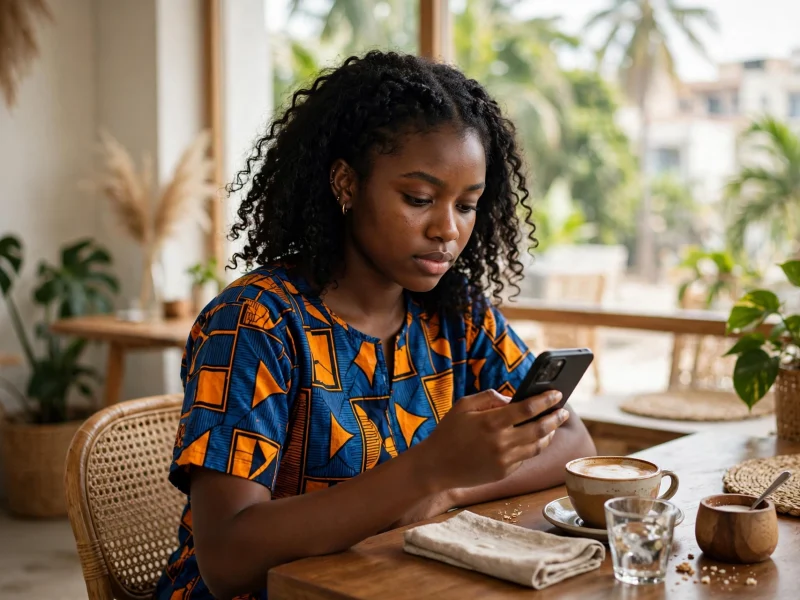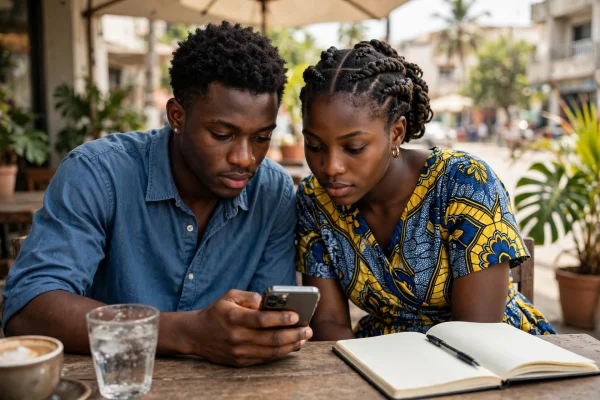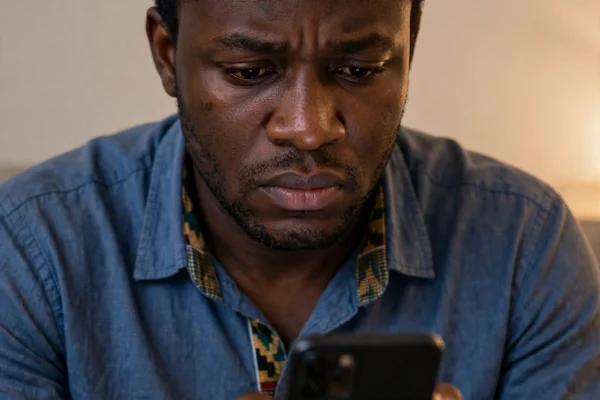
You search for a restaurant on Google, find its number, call to place an order, and send money by mobile money. The food never arrives. When you call back, the number is dead. The restaurant exists, but the listing was not theirs. Someone else had copied its name and photos, and listed their own phone number and mobile money account. You paid the scammer, not the restaurant.
This is not a guess, and it is not rare. Ghana’s Cyber Security Authority, known as the CSA, recorded 112 cases of restaurant impersonation between January and June 2026, up from 61 cases in the same six months in 2025. Reported losses rose from GH₵84,592.00 to GH₵296,083.68. That covers only cases that were reported. The real total is likely higher, because many people do not report a small order that never arrived.
The CSA issued a public alert about this pattern in July 2026. It said criminals were impersonating real restaurants on Google Search and Google Maps, and deceiving customers into paying for orders that were never fulfilled. This article explains how the scam works, who is at risk, what Ghanaian law says, and what you can do before you pay.
What Is Actually Happening
A Google Business Profile is the free listing that shows a business name, address, phone number, photos, opening hours and reviews when you search on Google or Google Maps. A real restaurant can claim its profile, which means it proves to Google that it owns the business, and then it controls the details shown. If a business has not claimed its profile, it is easier for someone else to change it.
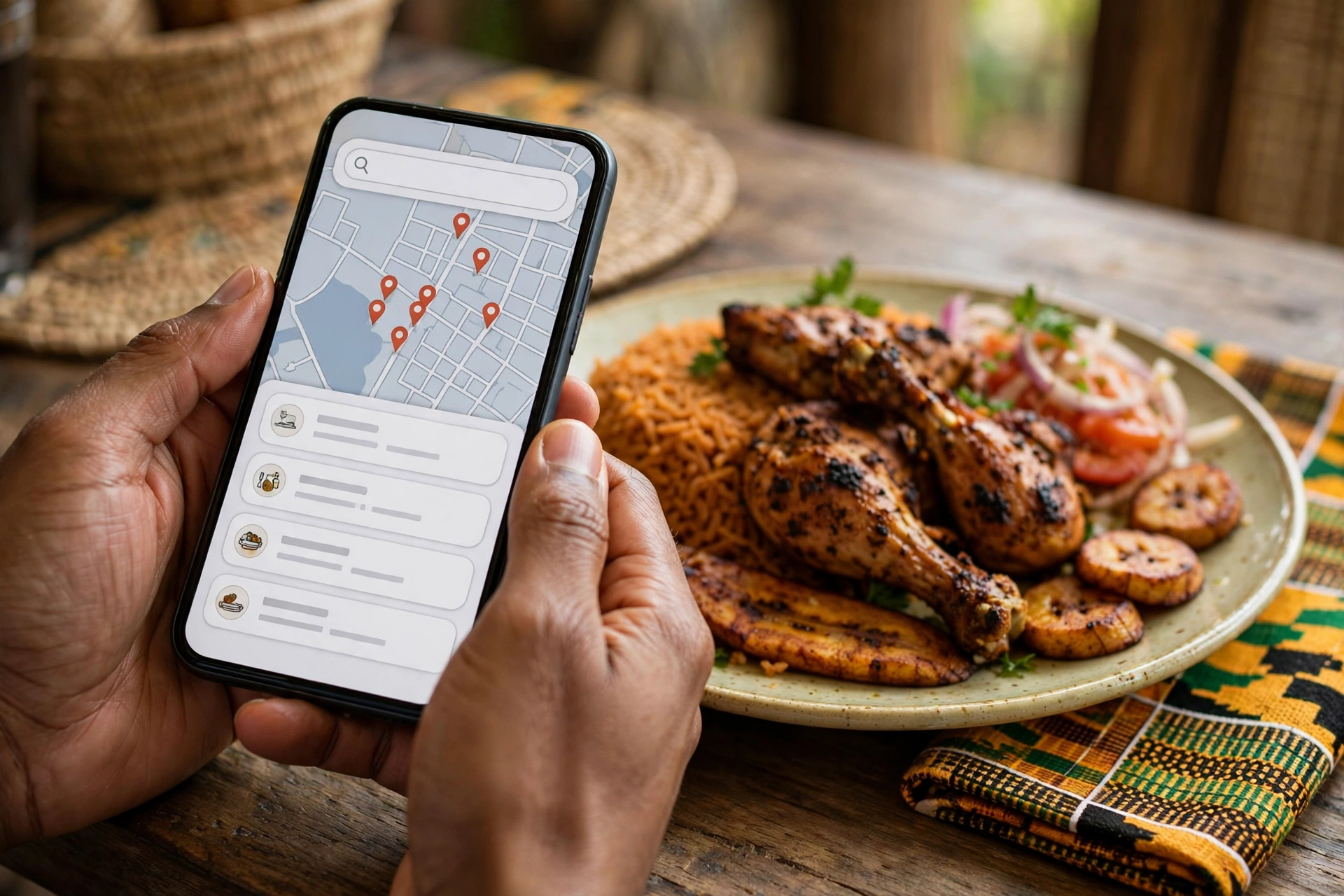
Scammers use three main methods, according to the CSA. First, they use a feature called suggest an edit, which lets any Google user propose a change to a listing, to replace the real phone number with their own. Second, they claim an unclaimed business profile, so Google treats them as if they run the business. Third, they create a duplicate listing, a second listing for the same real business, with the scammer’s phone number and mobile money details.
In each case, the customer sees a familiar name, real photos, and a real address. Only the contact has changed. When the customer calls, the scammer takes the order and asks for payment by mobile money before delivery. Once the money is sent, the scammer stops answering.
The CSA had warned about the wider pattern earlier in 2026, with 54 fake listing cases between 1 January and 26 April 2026, and reported losses of GH₵266,195. That alert covered fake listings in general, not only restaurants.
Why This Is Different
This scam is different because it does not ask you to click a strange link or download an app. It meets you inside a search you already trust. Most of us treat the top result on Google as if Google has checked it. Google does have checks, and it removes fake listings when they are reported, but those checks are not perfect. A listing can look complete and genuine, with photos, reviews and a map pin, and still carry a scammer’s number.
It is also different because the amount is small. A food order of GH₵150 or GH₵300, used here only as an example, does not feel like a big decision. You do not pause as you would before a large transfer, and many victims decide it is not worth reporting. Yet 112 cases in six months added up to GH₵296,083.68.
Third, the victim did nothing careless in the usual sense. They did not share a password or a PIN, and they did not fall for a message from a stranger. They searched for a known restaurant, called the number Google showed them, and paid for food. That normal behaviour is what makes the scam so effective.
The same trust is used in other scams too. In our guide to mobile money fraud in Ghana, we explain how scammers use familiar channels to get people to send money before they check. A fake listing works the same way.
Who Is At Risk
Anyone who orders food online is at risk, because the scam targets the search itself, not a particular type of person. If you search for a restaurant on Google and call the first number you see, you can reach a scammer. The risk is in the habit, not in the person.
Some groups face the risk more often, simply because they order more often. People who order lunch at work, families who order for the weekend, and students who order late at night all use Google Search and Google Maps regularly. Visitors to a new town are also at risk, because they have no local knowledge to fall back on.
Businesses are at risk too. A customer who pays a scammer may blame the real restaurant, leave a bad review, or never order again. A small restaurant that has not claimed its profile may not know a fake listing exists until customers complain about orders it never received.
Banks, hotels, courier services and government agencies have also been impersonated through fake listings, according to a CSA warning in August 2025. Ghana’s banks face the same trust problem, as we explain in our article on AI in Ghana banking.
What Ghanaian Law Says
Ghana has laws that cover this kind of fraud, even though no single law is called the fake listing law. The Cybersecurity Act, 2020, known as Act 1038, set up the Cyber Security Authority and gives Ghana a framework for dealing with cybercrime, which is a broad term for crimes committed using a computer, a phone, or the internet.
Fraud by false pretences is also an offence under Ghana’s Criminal Offences Act, 1960, known as Act 29. False pretences means getting money by making a false statement that the other person believes, which is what a scammer does when pretending to be a restaurant.
The Electronic Transactions Act, 2008, known as Act 772, also covers offences committed by electronic means, including fraud through a phone or a mobile money transfer. The Data Protection Act, 2012, known as Act 843, protects personal data, which is information that can identify a person, such as a name or a phone number.
The law has limits. The police and the CSA can investigate, and they can ask Google to remove a fake listing, but they cannot always recover money already sent by mobile money, especially if the report comes late. That is why checking before you pay matters most. This section is general information, not legal advice.
What To Actually Do: A Protection Checklist
Use this checklist every time you pay a business you found through a search.
- Check the number in two places. Compare the number on Google with the number on the restaurant’s own website, its verified social media page, or a trusted food delivery app. If they differ, use the restaurant’s own number.
- Watch for duplicates. If you see two listings for the same restaurant with different numbers, treat both with care until you have checked the restaurant’s own channels.
- Pause before you pay in full. If the person on the phone insists on full payment by mobile money to a personal number, stop. A real restaurant will usually accept payment on delivery, or through its own till number.
- Check the name on the mobile money account. Before you confirm, read the name on your phone. If it is a personal name, not the restaurant’s name, stop.
- Never share your PIN or a one time password. A PIN is the secret number that authorises payments from your account. A one time password, often called an OTP, is a short code sent to your phone to confirm a transaction. A real restaurant will never ask for either.
- Save evidence if something looks wrong. Take a screenshot of the listing, the number, and any messages, and save the transaction details. Then report the listing to Google. On Google Maps, open it, choose Suggest an edit, and report it as misleading.
If you run a restaurant, claim and verify your Google Business Profile now. That gives you control over the details shown. Check your listing weekly, and put the same number on your website, social media, and shop sign.
What To Do If You Already Sent Money
Act quickly, because time matters. First, stop and save everything. Keep screenshots of the listing, the phone number, the messages, and the transaction receipt. Do not delete the chat or the call history.
Second, contact your mobile money provider or your bank at once and ask whether the transaction can be reversed or blocked. A reversal is not guaranteed, but the sooner you ask, the better the chance. Ask for a reference number, and write it down.
Third, report the case to the Cyber Security Authority through its 24 hour reporting point. You can call or text 292, send a WhatsApp message to 0501603111, or email report@csa.gov.gh. Give them the fake number, the mobile money details, and your screenshots.
Fourth, report the fake listing to Google, so it can be removed. Fifth, warn the real restaurant, so it can alert its customers. If the amount is large, report to the police as well.
Conclusion
A fake Google listing is a reminder that the tools we use every day, search, maps, and reviews, are only as trustworthy as the information in them. The CSA figures for January to June 2026, 112 cases and GH₵296,083.68 in reported losses, show how many people trusted a listing that was not what it appeared to be. That is up sharply from 61 cases and GH₵84,592.00 in the same period in 2025.
The fix is not complicated, but it does require a habit. Check the number in two places. Check the name on the mobile money account before you confirm. Never share your PIN or a one time password. Report what you find, so the next person does not learn the same lesson.

Sources Referenced
- The High Street Journal, 23 July 2026, “Restaurant Impersonation Scams Cost Victims Nearly GH₵300,000 in First Half of 2026, CSA”. CSA figures: 112 cases January to June 2026, up from 61 in the same period in 2025, losses GH₵296,083.68, up from GH₵84,592.00. https://thehighstreetjournal.com/restaurant-impersonation-scams-cost-victims-nearly-gh%c2%a2300000-in-first-half-of-2026-csa/
- African Eye Report, “Ghana: Food Delivery Scams Rise as Agency Records 112 Cases, GH₵296,000 in Losses”. Same CSA figures, 112 cases January to June 2026, losses GH₵296,083.68, losses of GH₵84,592 in the first half of 2025. https://africaneyereport.com/ghana-food-delivery-scams-rise-as-agency-records-112-cases-gh%c2%a2296000-in-losses/
- TechFocus24, “CSA warns of rise in fake google listings targeting popular brands”. CSA warning on brand impersonation through Google Maps and Google Search, including food chains, banks, hotels, courier services and government agencies, with CSA reporting channels 292 and report@csa.gov.gh. https://techfocus24.com/csa-warns-of-rise-in-fake-google-listings-targeting-popular-brands/
- Ghanaian Times, 11 November 2026, “Cyber Security Authority warns against fake TraffiTech-GH traffic fine messages”. CSA 24 hour reporting channels confirmed: call or text 292, WhatsApp 0501603111, email report@csa.gov.gh. https://ghanaiantimes.com.gh/cyber-security-authority-warns-of-fake-traffitech-gh-traffic-fine-messages/
- MyJoyOnline, “Fake Google listings cost Ghanaians GH₵300,000”, as cited in the original draft. https://www.myjoyonline.com/fake-google-listings-cost-ghanaians-gh%C2%A2300000/ . Note: this link returned a 404 page not found when checked on 15 November 2026, so the CSA figures in this article are taken from sources 1 and 2 above, which report the same CSA figures.
- Cybersecurity Act, 2020 (Act 1038), which established the Cyber Security Authority. Criminal Offences Act, 1960 (Act 29). Electronic Transactions Act, 2008 (Act 772). Data Protection Act, 2012 (Act 843).