
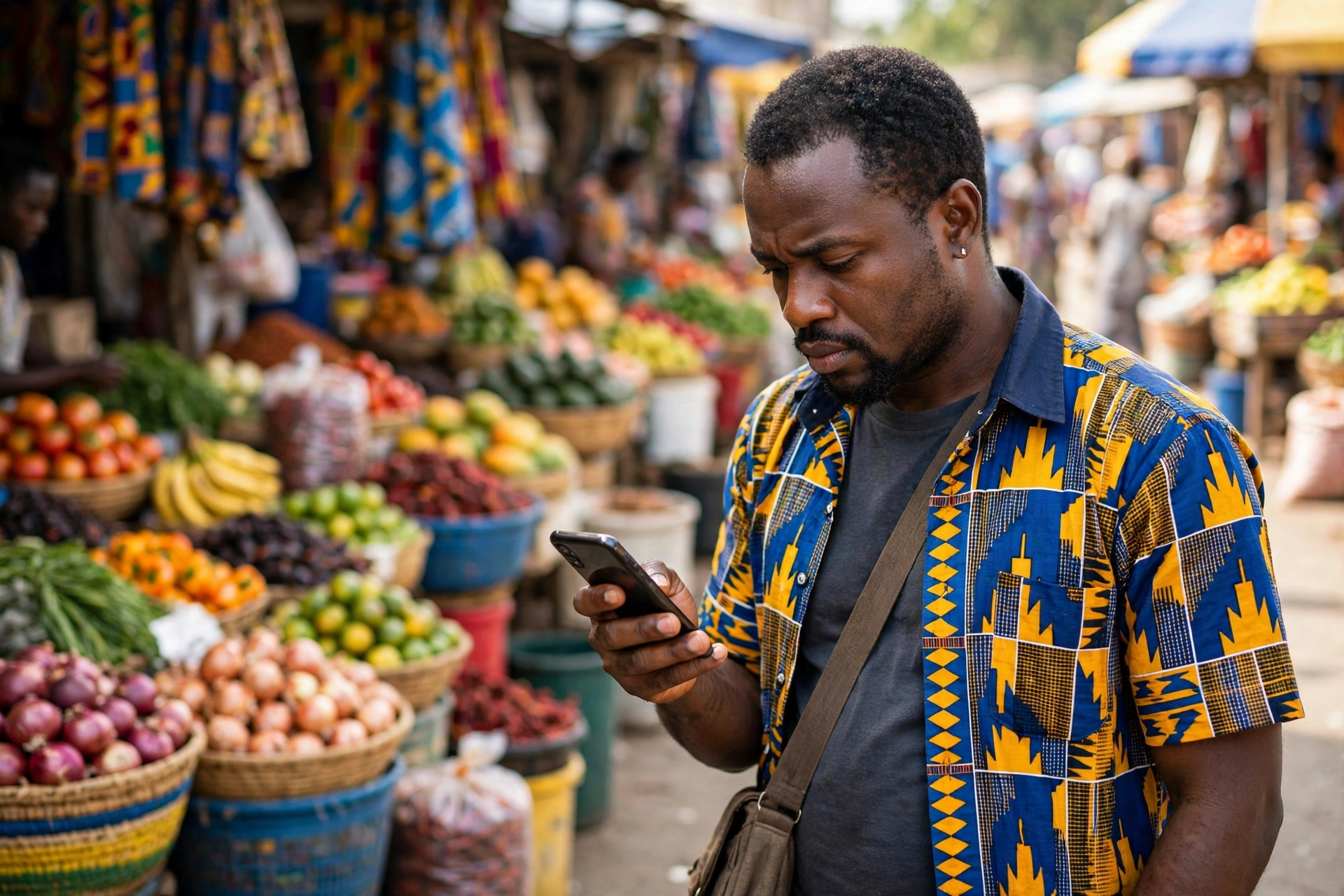
If you use Mobile Money in Ghana, you are not different. You are the target.
Fraud cases reported to the Bank of Ghana rose by 48% in a year, from 16,733 cases in 2024 to 24,778 in 2025, according to the Bank of Ghana’s 2025 Fraud Report. More than 97% of those cases came through payment service providers. In plain language, that means Mobile Money and the systems around it.
That number matters for a simple reason: the money did not mostly disappear because someone hacked a system. It disappeared because someone talked a real person into handing over the keys.
Here is how the tricks work, and what you can do to stop them.
What’s Actually Happening
Mobile Money fraud in Ghana is rarely a break-in by computer. It is a trick that works on people. A person, not a program, talks you into doing the one thing that moves your money.
A scammer does not need your phone. They need your PIN, your one-time password (OTP), or your permission to approve a payment you did not start. Once they have that, the system does exactly what it was made to do. It moves money fast, and it is very hard to get back.
Here are the patterns that show up again and again:
- The reversal scam: “I sent you money by mistake.” You get a call or message saying money was sent to your number by mistake, and asking you to reverse it. Sometimes a fake SMS arrives first to make it look real. The trick is in the timing. You are asked to send the money back before you have checked your own balance. If no money actually arrived, the “refund” comes out of your own money.
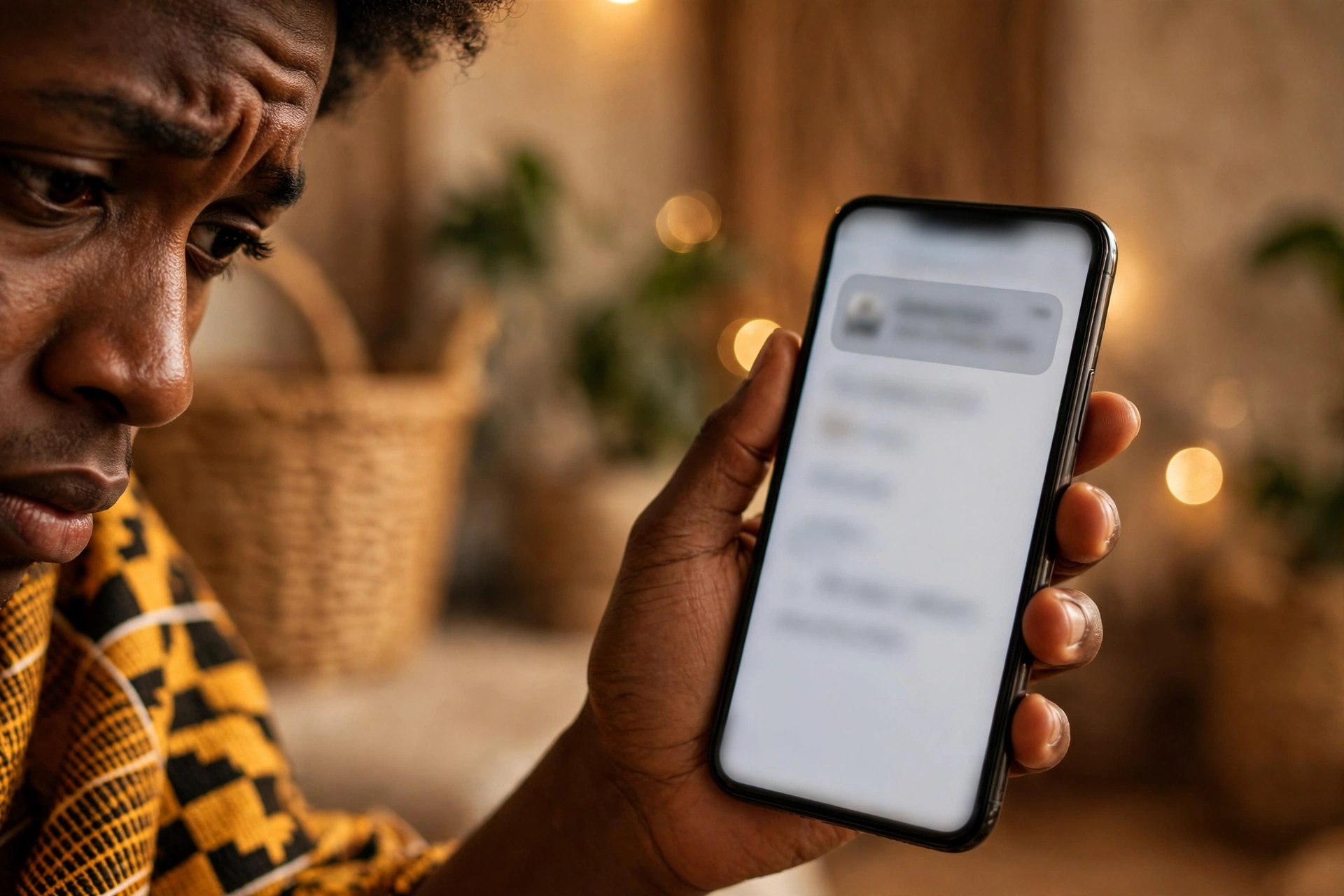
- The blocked account call: “Your MoMo account will be blocked.” Someone calls and says they are from MTN, Telecel, AirtelTigo, or your bank. They say your account will be blocked, or that there is a problem to fix, and they need your PIN or the OTP that just arrived on your phone. No bank or telecom company will ever ask you for your PIN or OTP. That request, on its own, is the proof it is a scam.
- The wrong number transfer. Money lands in your account from a number you do not know, followed quickly by a call asking you to send it back, often to a different number. The same rule applies as in the reversal scam. Check your balance first, through the official channel, and do not send anything to a different number.
- SIM swap. A scammer tries to get a replacement for your SIM card, so calls and OTPs meant for you go to them instead. Warning signs include your phone suddenly losing network for no reason, or messages about a SIM change you did not request. A SIM lock and a strong PIN make this harder.
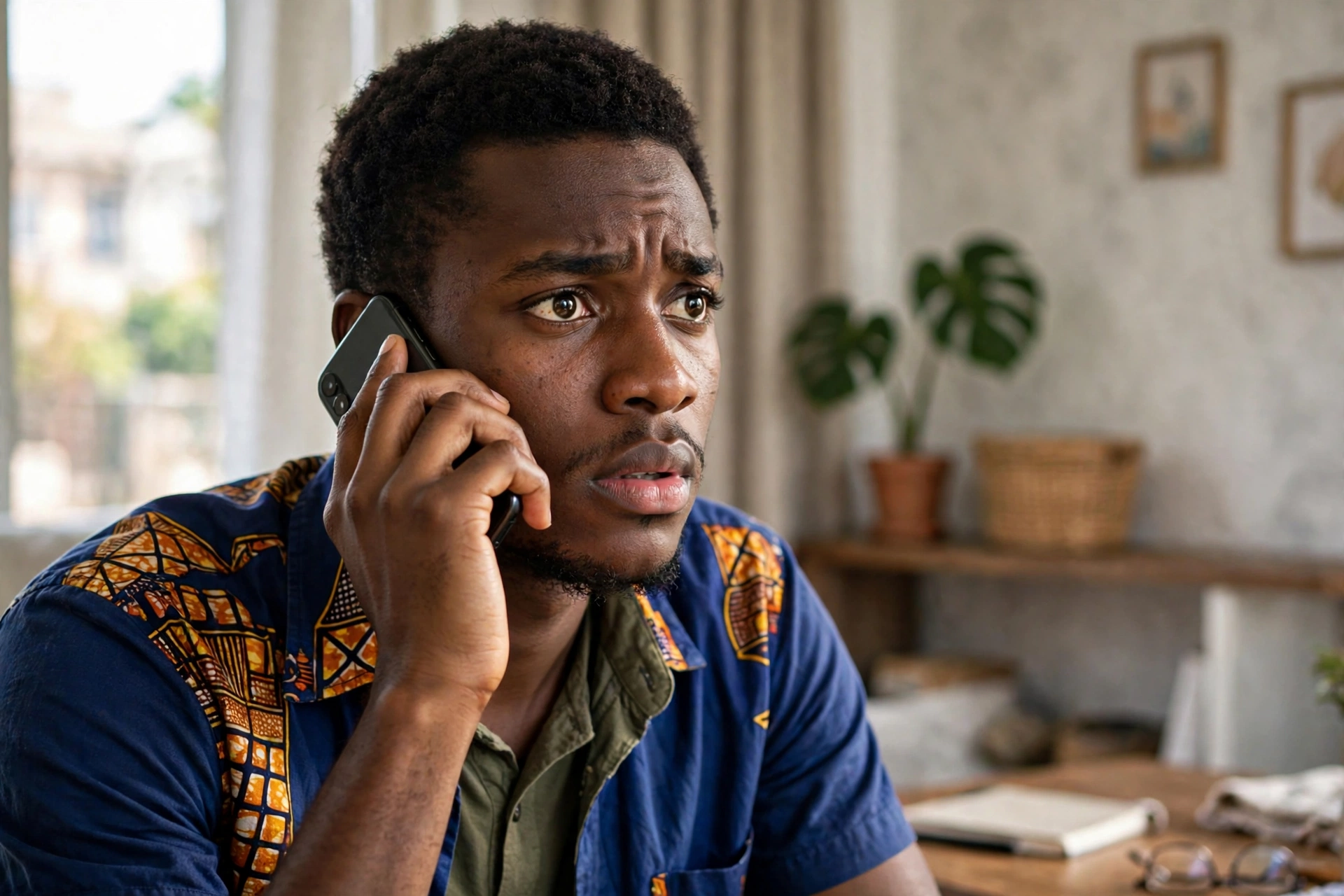
None of these need the scammer to be clever with computers. They need you to be rushed, polite, or afraid of losing your account.
Why This Is Different From Older Scams
Older scams were easier to spot. The spelling was bad, the story was strange, and the sender was obviously far away.
Mobile Money scams are different in three ways.
First, they use a system you already trust and use every day. A message about MoMo does not feel like a stranger’s email. It feels like your own money.
Second, they use urgency. “Your account will be blocked.” “Send it back now.” “This offer ends today.” Urgency is not an accident. It is the tool that stops you checking your balance, calling the official number, or asking someone else first.
Third, they are cheap and fast to run. A scammer can try the same script on hundreds of numbers in an afternoon. They only need a small number of people to say yes.
That is why the Bank of Ghana numbers matter. When cases rise from 16,733 to 24,778 in a year, it is not because Ghanaians suddenly became careless. It is because the trick works, on many people at once, on ordinary people doing ordinary things.
Who’s Actually at Risk
Everyone who uses Mobile Money. That is almost everyone.
Traders who receive payments all day and cannot stop to check every message. Students and workers who send money home. Older relatives who are less used to OTPs and are more likely to trust a confident caller. Small businesses that use a personal MoMo number for the shop, so a customer payment and a scam message look the same.
If you think “this would never work on me,” that is exactly the confidence the script is built to use. The people who lose money are not foolish. They are busy, they are trying to be helpful, and they are caught in a moment when checking feels slower than just doing what the caller asks.
What Ghanaian Law Says
There is no single “Mobile Money fraud law” to quote, but the rules around it are real:
- The Bank of Ghana regulates payment service providers and publishes the annual fraud figures used above. Licensed providers have rules on customer protection and reporting.
- The Cybersecurity Act, 2020 (Act 1038) covers online crime, including fraud carried out online or by phone, and gives the Cyber Security Authority (CSA) its job and power to act.
- The Data Protection Act, 2012 (Act 843) covers how your personal data should be handled. This matters when a scammer has somehow got your number, name, or other details.
The law can punish the scammer after the fact. It cannot undo a payment you approved yourself. That is why the practical steps below matter more than any single law. Stopping it before it happens is what really protects you.

What to Actually Do: A Protection Checklist
- Never share your PIN or OTP, with anyone, for any reason. Not with a caller from MTN, not with your bank, not with a “customer service agent.” A real official will never ask for them. If someone asks, end the call.
- Check your balance before you reverse anything. If someone says they sent you money by mistake, open your MoMo app or dial the official code and check. If the money is not there, do not send anything. If it is there, report it through the official channel. Do not send it to a different number.
- Slow down when you feel rushed. Urgency is the warning sign, not the reason to act. A blocked account, a mistaken transfer, or a prize can wait five minutes while you check it. Tell the caller you will call the official number back, and do that.
- Check through a channel you already know. Do not use a number the caller gives you. Call the number on the back of your card, on the company’s official website, or on the app you already use. For scams in general, you can report to the Cyber Security Authority. Call 292, WhatsApp 0501603111, or email report@csa.gov.gh, and contact your MoMo provider first to try to stop or report the payment.
- Lock your SIM and keep your PIN separate. Set a SIM PIN so a replacement SIM is harder to use without you, and do not use your MoMo PIN as your phone password or your password anywhere else. One leak should not open every door.
- Talk about it with the people who are most at risk. Tell your parents, your shop assistant, and the person who handles payments for your business about the reversal and blocked account tricks. Most victims had never heard the exact trick before it arrived.
Conclusion
Mobile Money is not the problem. It is one of the most useful things in Ghana. It moves money to a trader, a student, or a parent in seconds.
The problem is that the same speed and ease make it a good target, and the trick is not about computers. It is about people. A confident voice, a fake emergency, and a request for the one code that moves your money.
The Bank of Ghana’s figures, 24,778 cases in 2025, up 48% from 16,733 in 2024, are a reminder, not a reason to stop using MoMo. Use it. Just do not let anyone rush you into giving away the keys to it.
Check first. Share nothing. And if it feels urgent, that is when to slow down most.
Sources Referenced
- Bank of Ghana, 2025 Fraud Report. Fraud cases rose from 16,733 in 2024 to 24,778 in 2025, up 48%. More than 97% of cases came through payment service providers.
- Cyber Security Authority (CSA) reporting channels: call 292, WhatsApp 0501603111, email report@csa.gov.gh
- Ghana: Cybersecurity Act, 2020 (Act 1038); Data Protection Act, 2012 (Act 843).







8 Comments