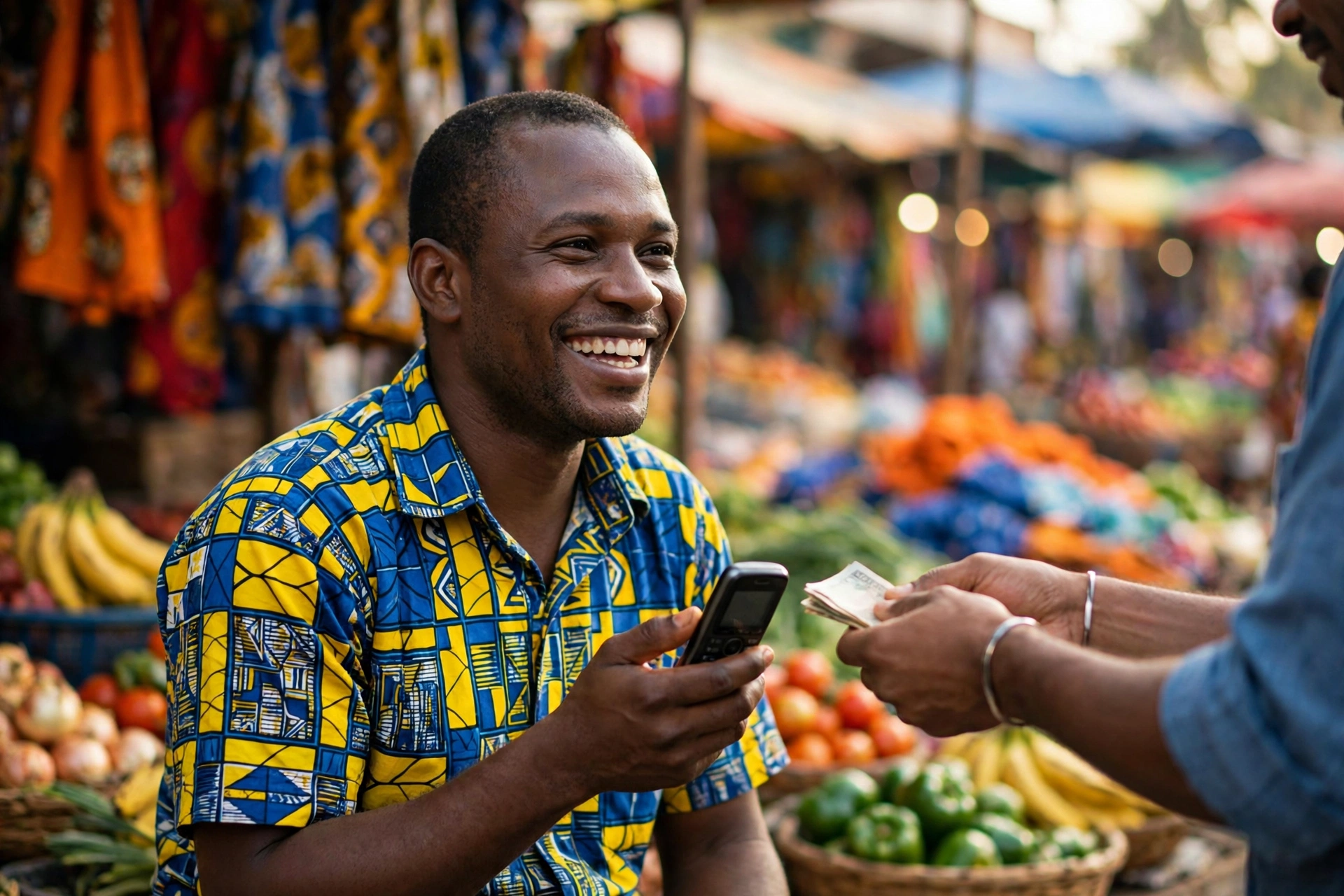
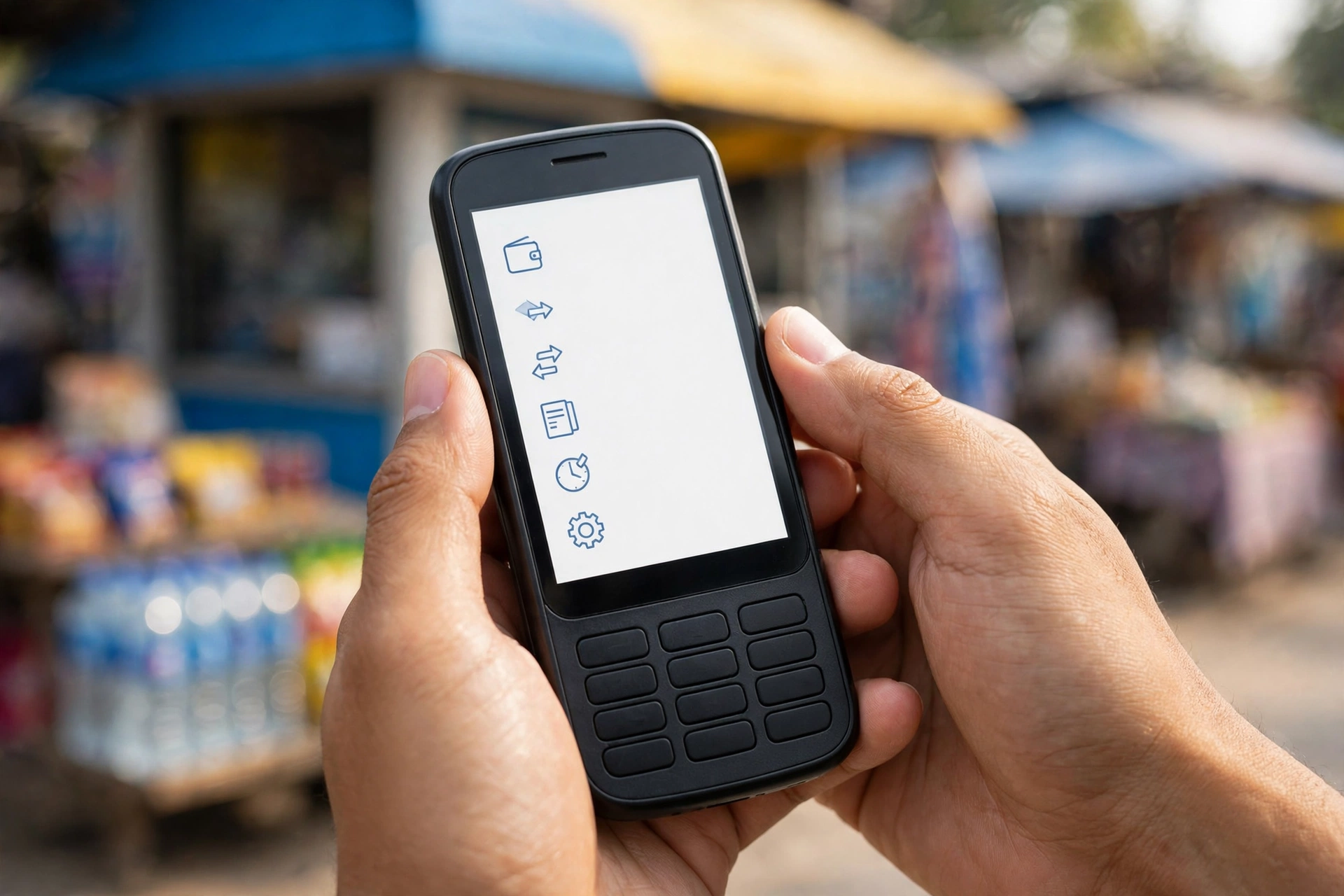
On 8 May 2026, Matilda Asante-Asiedu, Second Deputy Governor of the Bank of Ghana, spoke at the 3i Africa Summit in Accra. People can send money from a basic phone using a short code, known as USSD, without internet or a smartphone. According to the World Bank Global Findex Database 2025, 81 percent of adults in Ghana hold a financial account.
It is a real achievement. Ghana has also kept the top place in the world for mobile money regulation, scoring 96.10 percent in the 2025 GSMA Mobile Money Regulatory Index. Yet the story has a second half. In October 2026, Bank of Ghana Governor Dr Johnson Pandit Asiama said the figure falls to 52.7 percent when actual use and service quality are counted. Private sector credit remains about 10 percent of GDP. Having an account is not the same as being able to borrow, insure a business, or build a credit history that a lender will trust.
What Is Actually Happening
Financial inclusion means adults can use affordable services, such as an account, payments, savings, credit, and insurance, in a way that helps them in daily life. In Ghana, the first part has worked very well, and mobile money is the reason. It lets a person store value on a phone, send money, receive payments, and pay for goods. Much of this happens through agents, local people and small shops that help customers put cash into a wallet and take cash out.
The Bank of Ghana reported that in 2025, mobile money transactions were worth GH¢4.54 trillion, across 9.70 billion transactions, up 50.8 percent from 2024. By the end of 2025, there were 80.5 million registered accounts and 26.7 million active accounts, meaning accounts used at least once in the previous 90 days. Those numbers need careful reading. The 80.5 million accounts are not 80.5 million people, since one person can hold more than one account. The GH¢4.54 trillion is gross transaction value, which counts money as it moves, sometimes more than once. The amount actually held in wallets at the end of 2025 was about GH¢39.6 billion. Even so, the achievement is genuine. To see how fraudsters target that same system, read our guide on how mobile money fraud actually works in Ghana.
What the Number Does Not Measure: The Credit Gap
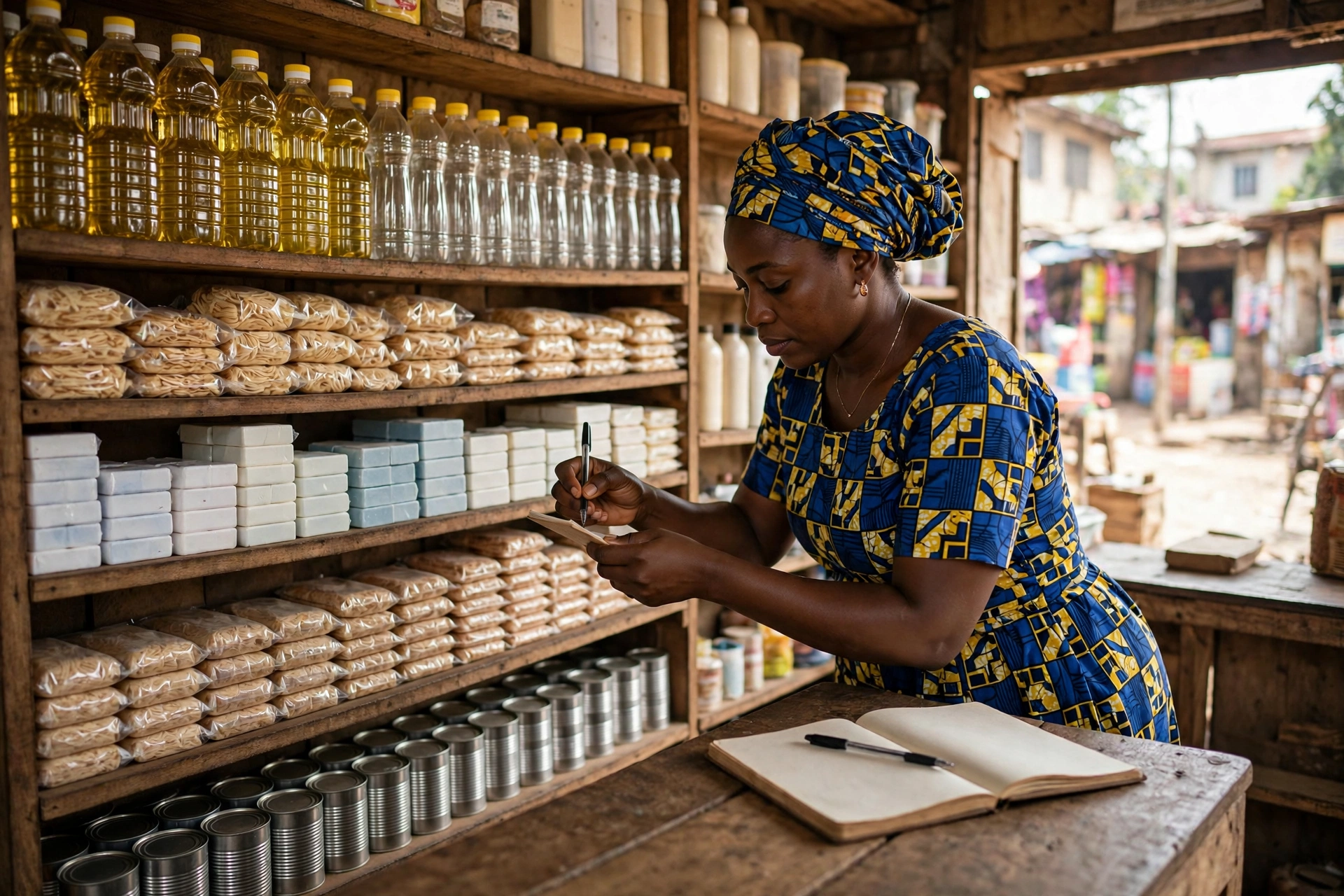
Small businesses are the backbone of Ghana’s economy. Micro, small and medium enterprises, known as MSMEs, account for 92 percent of all businesses in Ghana and generate 70 percent of GDP, according to UNCDF and the Ministry of Finance. They also provide most private sector jobs. Yet they face a financing gap estimated at 5 billion dollars as of 2024, according to Stanbic Bank Ghana figures cited by UNCDF.
A financing gap is the difference between the credit businesses need and the credit they can actually get. Other estimates point the same way. Several reports put the gap at about 4.8 billion dollars a year, and a newer World Bank and IFC report puts it at 11 billion dollars. Demand far exceeds supply.
The barriers are structural, not personal. Many small businesses have no collateral, an asset a lender can take if a loan is not repaid. Many have no audited records, formal statements checked by an independent professional. Many are not formally registered. Many owners also lack financial literacy, the knowledge to compare loan products and keep records a lender can read. An entrepreneur can therefore be fully included by the account measure, holding a wallet and transacting daily, and still be shut out of the credit that would let her buy more stock, hire staff, or survive a bad month.
Why This Is Different From Older Financial Exclusion
In the past, exclusion was mostly about distance and paperwork. A person lived far from a bank branch, could not meet the minimum balance, or could not produce the documents a bank asked for. The door was closed, and everyone could see it.
Today, the door is open but the room behind it is narrow. A trader in Kumasi or Tamale can receive payment on her phone in seconds and pay a supplier without travelling with cash. Yet when she asks for a loan to grow, the lender often asks for the same old things, collateral, formal registration, and audited statements, and judges her by rules written for larger, formal companies.
Mobile money data has not yet solved that problem. A payment history shows that money moves, but it does not by itself prove that a business is creditworthy, which means likely to repay a loan on time. Turning payment records into a trusted credit score is the missing step. Lenders are starting to use software to score borrowers from digital data. Done well, that can open credit to people banks once ignored. Done badly, it can hide old bias inside a new system. Our article on AI in Ghana banking explains how the Bank of Ghana is already setting governance rules for AI in banks.
Who This Is For
This article is for the people the headline number is most often used to describe, and who feel its limits most directly. It is for market traders, food sellers, tailors, drivers, farmers, and shop owners who use mobile money every day but cannot get a business loan. It is for young entrepreneurs who have customers and sales on their phones, but no formal credit history. It is for women-led businesses in particular. Women own 44 percent of MSMEs in Ghana, according to the Ghana Statistical Service and World Bank figures. Yet women-led businesses often face steeper barriers to credit, including less collateral in their own names.
It is also for policymakers, bankers, and fintech builders who report inclusion numbers. If the goal is opportunity, the measure that matters is not only how many people hold an account. It is how many can borrow at a fair price, insure against loss, and save for the long term. Only about 22 percent of adults were financially healthy in the 2021 FinScope Survey, which means able to manage daily money, cope with a shock, and plan ahead.
What Ghanaian Law Says
Ghana does not lack laws that touch this problem. The Payment Systems and Services Act 2019, Act 987, is the main law for mobile money and payment services. The Borrowers and Lenders Act 2020, Act 1052, sets rules for loan agreements, and requires lenders to give borrowers clear written terms, including the loan amount, interest rate, fees, and repayment schedule. The Data Protection Act 2012, Act 843, governs personal data.
In September 2025, the Bank of Ghana issued a Directive for Digital Credit Services Providers, which took effect on 1 November 2025. Digital credit means short term credit, under 12 months, of low value, delivered through digital channels. Under the Directive, a provider must be licensed by the Bank of Ghana. It sits under the Non-bank Financial Institutions Act 2008, Act 774, and must be read with the Borrowers and Lenders Act and the Data Protection Act. The Bank of Ghana says the public can check a provider by writing to digitalcredit@bog.gov.gh. Credit from an unlicensed lender can mean unclear terms, high charges, misuse of personal data, and harsh debt collection, with little chance of redress. Before you borrow, check that the lender is licensed, read the full terms, and keep a copy.
What Is Actually Working, Told Fairly
Real efforts are underway, aimed at turning digital business activity into a usable credit signal. One example is the partnership between Adehyeman Savings and Loans and Oze, a fintech company that builds digital lending systems. With support from the United Nations Capital Development Fund, known as UNCDF, Adehyeman is digitising loan creation and credit assessment using Oze’s system. Under a two year rollout from 2026 to 2027, Adehyeman plans to provide GH¢30 million, about 2.3 million dollars, in loans to around 1,500 MSMEs.
A second example comes from UNCDF itself. In June 2026, UNCDF, with the UN Resident Coordinator’s Office, UNDP, and UNCTAD, brought donors, investors, and lenders together in Accra to showcase five market-ready digital finance solutions for women entrepreneurs and youth-led MSMEs, to mark International MSME Day. Under the next phase, the two top performing institutions were each to receive up to 200,000 dollars in catalytic funding, small early money meant to prove an idea works so larger investors will follow. In September 2026, UNCDF awarded Fido, one of the five providers, a 200,000 dollar grant to scale its product. These are genuine green shoots, but not yet proof that the credit gap is closing at the scale of the account inclusion achievement. A GH¢30 million pilot reaching about 1,500 businesses is meaningful, but it sits against a gap measured in billions of dollars.

What To Actually Do: A Practical Checklist
If you run a small business, keep records a lender can read. Record daily sales, costs, and stock, even in a simple notebook or app. Separate business money from personal money, and use one wallet for the business where you can. Register the business if you can, and keep tax and registration papers in one place. Before you borrow, ask for the full cost in writing, including the interest rate, all fees, the total to repay, and the penalty for late payment. If the lender will not put it in writing, do not borrow. Check that a digital lender is licensed by the Bank of Ghana, and keep the agreement and proof of every payment.
If you lend, build, or regulate, treat account inclusion and credit access as two separate national measures, and report both side by side. Build shared, portable credit scoring standards, so a good record can travel from one lender to another. Make algorithmic lending fair and explainable, with a clear reason for a refusal and a way to challenge it. Scale what works, and track it in public. Protect borrower data as strictly as borrower money.
Conclusion
Ghana’s 81 percent financial inclusion rate is a genuine national achievement, built on phone-based access through agent networks. Ghana also leads the world on mobile money regulation, and its mobile money system moved GH¢4.54 trillion in 2025. But an account is not capital, and inclusion measured at the level of transactions is not the same as inclusion measured at the level of opportunity. The businesses that make up 92 percent of Ghana’s enterprises and 70 percent of its GDP still face a credit gap measured in billions of dollars. Women own 44 percent of those businesses. Only about 22 percent of adults are financially healthy by the FinScope measure. The next chapter should be judged not by how high the account number climbs, but by how quickly and honestly the country closes the gap beneath it.
Sources Referenced
- World Bank, Global Findex Database 2025, 81 percent of adults in Ghana hold a financial account.
- Bank of Ghana, press release, Ghana Retains Top Spot in GSMA 2025 Mobile Money Regulatory Index, 20 February 2026. Bank of Ghana GSMA press release
- Bank of Ghana, Payment Systems Oversight Annual Report 2025, mobile money transactions GH¢4.54 trillion, 9.70 billion transactions, 80.5 million registered accounts, 26.7 million active accounts, GH¢39.6 billion float.
- Bank of Ghana, Directive for Digital Credit Services Providers, September 2025, effective 1 November 2025, and Bank of Ghana Digital Credit Services FAQs, July 2026.
- UNCDF, Derisking digital MSME lending in Ghana, 19 March 2026, Adehyeman Savings and Loans and Oze, GH¢30 million to around 1,500 MSMEs, 2026 to 2027. UNCDF on Adehyeman and Oze
- United Nations in Ghana, Beyond the Blueprint: Ghana Showcases Digital Finance Solutions to Unlock Growth for Women and Youth-Led MSMEs, June 2026, five solutions, up to 200,000 dollars in catalytic funding for each of the top two institutions. United Nations in Ghana, Beyond the Blueprint
- UNCDF, Building investable markets in Ghana through catalytic finance, 28 April 2026, MSMEs 92 percent of businesses and 70 percent of GDP, financing gap 5 billion dollars as of 2024. UNCDF on MSME financing
- World Bank, Improving Access to Finance for Ghanaian SMEs, June 2019, MSME financing gap, formal MSME credit market, and women-owned MSMEs.
- The Fintech Times, The Fintech Ecosystem of Ghana in 2026; SME Finance Forum, Ghana country data; Stanbic Bank Ghana, Bridging the Finance Gap for SMEs as a Pathway to Sustainable Growth.
- Payment Systems and Services Act 2019, Act 987; Borrowers and Lenders Act 2020, Act 1052; Data Protection Act 2012, Act 843; Non-bank Financial Institutions Act 2008, Act 774.