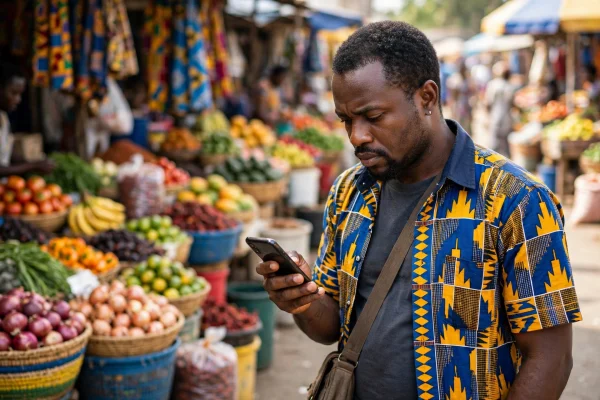

A message arrives on WhatsApp. A recruiter with a foreign number offers you a remote job. The pay is good, far better than anything local, and the work seems simple: customer service, data entry, or social media management. The company will cover your flights and accommodation. It sounds like the break you have been waiting for. For some young Ghanaians, it has turned out to be something far worse.
On 10 May 2026, the Ministry of Foreign Affairs said 28 Ghanaians, mostly young people, had been rescued from a human trafficking network in Côte d’Ivoire and brought safely back to Ghana. On 5 October 2026, the ministry issued another warning, this time about Zambia. Six Ghanaians had been arrested in Lusaka on 23 August 2026 at a suspected cybercrime facility. The ministry said some had been recruited for what looked like legitimate online data entry jobs, and some were allegedly forced into online scam work after their passports were taken. This article is a warning based on that documented reporting, and a practical guide to help you spot the pattern before you travel.
What Is Actually Happening
Human trafficking means recruiting, moving, or holding a person by trickery, force, or pressure, so that the person can be exploited. Forced labour means work done under threat, without real freedom to stop or walk away.
In the pattern described by the United Nations Office on Drugs and Crime, known as UNODC, and in the Ghana warnings, the process often follows the same steps. First, the offer arrives through WhatsApp, Telegram, or social media. It promises high pay for simple online work, and it asks for little or no experience. Second, the recruiter is friendly and professional. There may be an interview, a contract that looks real, and promises of free flights, housing, and meals. Third, the person travels. On arrival, the story changes. Passports were taken, phones were taken or watched, and movement was restricted.
The place they are taken to is often called a scam compound. A scam compound is a guarded building or closed site where people are forced to run online fraud for a criminal group. The work can include romance scams and investment scams. The victims are not the owners of the scam. They are the labour, forced to do the work.
UNODC says more than 300,000 people are currently trapped in scam centres in Southeast Asia, and victims identified by late 2025 came from nearly 80 nationalities. UNODC also says this form of trafficking, called trafficking for forced criminality, grew from 1 percent of detected victims worldwide in 2016 to 8 percent in 2022. Forced criminality means a person is made to commit a crime for the benefit of traffickers.

Why This Is Different From an Ordinary Job Scam
An ordinary job scam usually ends with a loss of money. You pay a fee for a job, a visa, or training, and the job never exists. That loss is painful, but you can usually walk away.
This pattern is different because the loss is freedom, not only money. The job is the bait, and the travel is the trap. Once a person is in a foreign country without a passport, without a phone, and without local contacts, leaving becomes very hard. The traffickers may invent a debt for flights and housing, a practice called debt bondage, which means a person is told they must keep working until a debt is paid, even when the debt keeps growing. They may threaten the person or the person’s family.
Many of the people forced into this work are recruited to run the same kinds of scams that honest job seekers are warned about in Ghana. Our guide to how mobile money fraud actually works in Ghana explains how investment and impersonation scams use urgency and trust to pressure people into sending money. In a scam compound, a trafficked worker may be forced to send those same urgent messages to strangers. That does not make the worker the criminal mastermind. It makes the worker a victim who needs help.
Who Is At Risk
The targeting is not random. UNODC says recruiters look for people who speak English, have digital skills, and are familiar with social media, because scam operations need workers who can write convincing messages in English. Ghana has many young, educated, English speaking job seekers who are active on WhatsApp and eager for remote work. That combination makes them attractive targets.
The risk is highest for people who are looking for work urgently, who have recently finished school or training, or who feel pressure to support family. It is also higher for people who trust a message because it came from a friend, a group chat, or a person who seems successful online. A recruiter does not need to convince everyone. They only need to convince a few people who are hopeful and reluctant to question a good opportunity.
Age, education, or intelligence does not protect a person on its own. UNODC says many victims are educated and tech savvy, and simply looking for work. The protection comes from checking, not from confidence. A careful graduate who pauses and verifies an offer is safer than a confident graduate who travels on trust alone.

What Ghanaian Law Says
Ghana has a specific law against this crime. The Human Trafficking Act, 2005, known as Act 694, makes human trafficking a criminal offence in Ghana. The Act covers recruitment, transportation, transfer, harbouring, and receipt of persons for exploitation, where the means include fraud, deception, or taking advantage of a person’s vulnerability. The Act was amended in 2009, and it provides for a minimum sentence of five years in prison. The Human Trafficking Regulations of 2015, known as L.I. 2219, give more detail on how the Act is applied.
The Ghana Police Service has a dedicated Anti-Human Trafficking Unit. That unit was involved in the operation that led to the rescue of the 28 Ghanaians from Côte d’Ivoire in May 2026. The Cyber Security Authority, known as the CSA, is the national body for cybercrime reporting in Ghana.
The law matters for two reasons. First, a recruiter who lures a person abroad with a false job offer can face serious criminal charges in Ghana. Second, a person who was forced to run scams in a compound is a victim of trafficking, not simply a willing participant.
What To Actually Do: A Practical Checklist
Use this checklist before you accept any remote job that involves travel.
- Pause when the offer arrives out of nowhere. Be suspicious of any job offer that arrives unsolicited through WhatsApp or Telegram, especially from a foreign number or a new account.
- Check the company through independent channels. If you cannot find it outside the recruiter’s own messages, do not travel.
- Never pay money up front for a job, a visa, or training. A legitimate employer does not ask a job seeker to pay for the job.
- Ask for the offer in writing, and show it to someone you trust. A real employer will not mind being checked. A recruiter who pressures you to decide quickly is giving you a warning sign.
- Tell a trusted person your full plan before you travel. Share the recruiter’s name and number, the flight details, the address where you will stay, and a copy of your passport.
- Check with the Ministry of Foreign Affairs before you go. Verify the offer with the ministry, with the Ministry of Labour, Jobs and Employment Relations, or with Ghana’s mission in the country concerned.
- Keep control of your passport and phone. Do not hand your passport to an employer or agent on arrival. If someone takes your passport, or restricts your movement, seek help at once.
- If you are already abroad and feel unsafe, contact the nearest Ghana mission, the local police, or a trusted organisation that works on trafficking.
For safe routes into tech work from Ghana, read our guide on how to break into tech without a computer science degree. It explains practical paths such as learning and building a portfolio, without travelling on an unverified offer.

Where To Get Help
If you receive a suspicious offer, or if you are worried about someone who has travelled on one, act early. You do not need to be certain that it is trafficking to ask for advice.
Report online scam and recruitment messages to the Cyber Security Authority. You can call or text 292, send a WhatsApp message to 0501603111, or email report@csa.gov.gh. Those contacts are the CSA’s 24 hour reporting point, confirmed in CSA public alerts in November 2026. Save the messages, screenshots, and phone numbers before you report.
For a crime in progress, or if a person is in immediate danger in Ghana, contact the Ghana Police Service on 191 or 18555. Ask for the Anti-Human Trafficking Unit if the case involves recruitment, travel, or forced work.
For an offer that involves travel abroad, contact the Ministry of Foreign Affairs in Accra, or the nearest Ghana embassy or high commission in the country concerned, before you travel. A dedicated public phone number for the ministry for trafficking checks could not be verified for this article, so use the ministry’s official channels, and do not rely on a number given to you by a recruiter.
Conclusion
The line between a scam and trafficking is thinner than most people think. A job offer that asks you to travel to a foreign country for work you have never verified is not just a financial risk. It is a physical risk, and it can affect your freedom, your safety, and your future.
The best defence is a habit of verification, and a willingness to walk away from an offer that sounds too good, even when the need for work is real and pressing. Pause, check the company, show the offer to someone you trust, verify it with the Ministry of Foreign Affairs, and never pay up front or hand over your passport. A real employer will respect those steps. A trafficker will not.
Sources Referenced
- Graphic Online, 11 May 2026, Verify travel offers before payment, Foreign Affairs Ministry warns after rescue of 28 Ghanaians from traffickers in Côte d’Ivoire. https://graphiconline.com/news/general-news/verify-travel-offers-before-paying-foreign-affairs-ministry-warns-after-28-ghanaians-rescued-from-traffickers-in-cote-divoire.html
- Ghanaian Times, 6 October 2026, Ghana warns citizens over fake jobs and forced cybercrime in Zambia. https://ghanaiantimes.com.gh/ghana-warns-citizens-over-fake-jobs-and-forced-cybercrime-in-zambia/
- United Nations Office on Drugs and Crime, Forced to scam: Inside one of the fastest growing forms of human trafficking. https://www.unodc.org/unodc/frontpage/2026/July/forced-to-scam_-inside-one-of-the-fastest-growing-forms-of-human-trafficking.html
- United Nations Office on Drugs and Crime, 30 July 2026, Trapped Behind the Scam: UNODC Mobilizes Communities and Content Creators Against Human Trafficking. https://www.unodc.org/westandcentralafrica/en/westandcentralafrica/stories/2026/-pigs-derriere-lescroquerie–_-lonudc-mobilise-les-communauts-et-les-crateurs-de-contenu-contre-la-traite-des-personnes.html
- Human Trafficking Act, 2005, Act 694, as amended in 2009, and Human Trafficking Regulations, 2015, L.I. 2219. No live link used, law cited by name and number only.
- Original draft source listed in the WordPress draft, Joy Online, Human trafficking scam compounds West Africa. The URL given in the draft, https://www.myjoyonline.com/human-trafficking-scam-compounds-west-africa/, returned a 404 error when checked on 15 November 2026, so it is not used as a live link in this rewrite.