
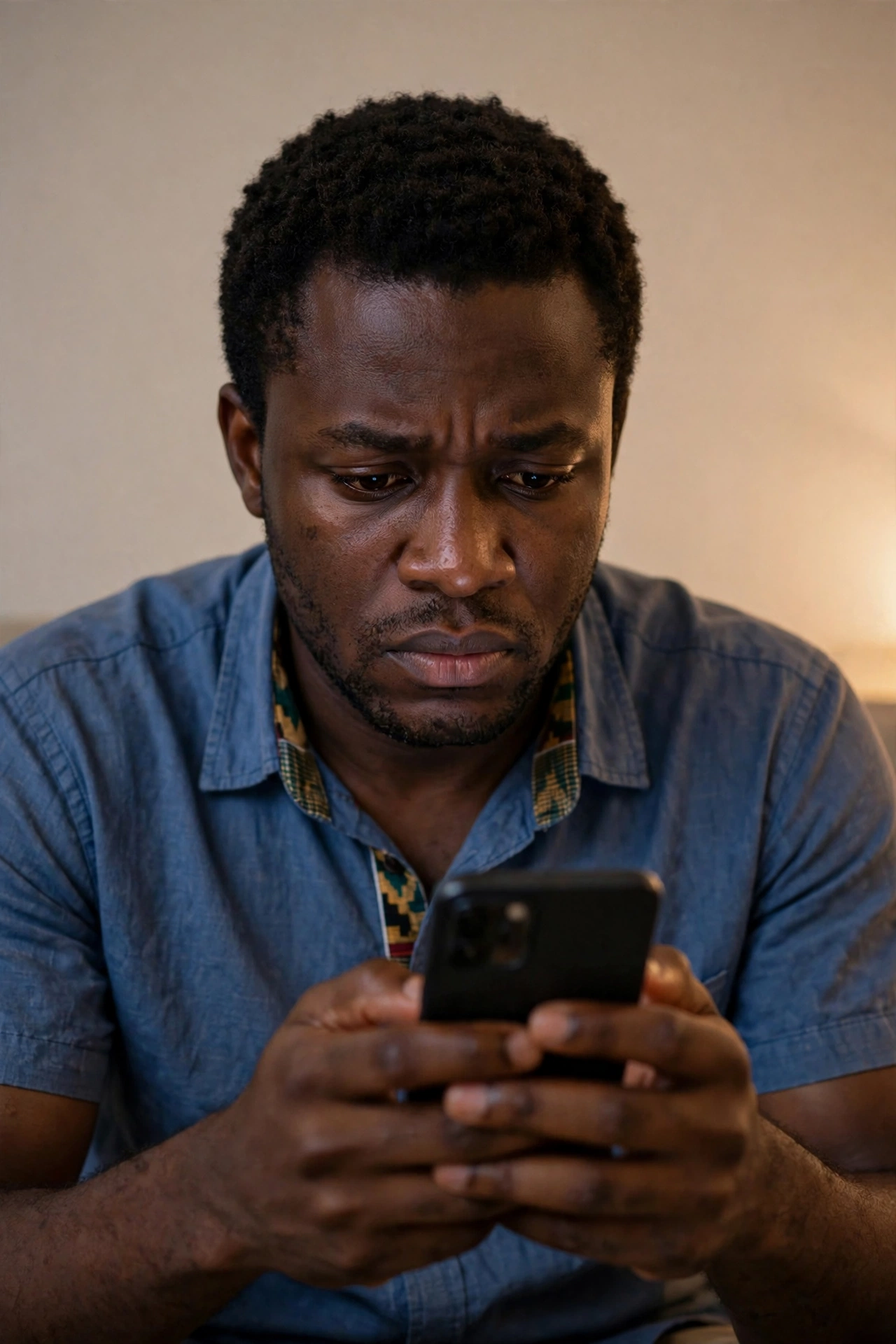
Imagine a video on WhatsApp or Facebook in which the President of Ghana appears to ask citizens to send money to a particular account. The voice sounds right. The face moves the way a face should move. The message is urgent, and it seems plausible enough that you pause. That pause is exactly what the people making these videos are counting on.
In May 2026, the Cyber Vetting and Enforcement Team of the Ghana Police Service, known as CVET, arrested 11 people in the Volta Region over AI generated videos that impersonated President John Dramani Mahama. The arrests came only weeks after President Mahama launched Ghana’s National AI Strategy on 24 April 2026.
What Is Actually Happening
A deepfake is a video, photo, or audio clip made or changed with artificial intelligence, often shortened to AI. AI means computer software that can learn from examples and create new material that looks or sounds like a real person. A deepfake can make a person appear to say or do something they never said or did.
The tools are now cheap and easy to find. What once needed a film studio can now be made on an ordinary laptop or phone. The quality has improved, so a quick look is no longer enough to tell a real video from a fake one.
In Ghana, deepfake scams have impersonated public figures, journalists, and family members. The most dangerous version is the polished one that arrives through a channel you already trust and asks you to act quickly.
Scammers use these fakes in a few common ways. They may pretend to be a president asking for donations, a celebrity promoting a product, or a relative in trouble asking for mobile money. In each case, the face and the voice borrow trust the scammer has not earned.
The Case That Proved It Is Real in Ghana
Between 1 and 3 May 2026, CVET carried out operations in Sogakope, Dabala, Tongu, Akatsi and Aflao in the Volta Region, and five people were arrested. A further operation on 4 May in Aflao led to six more arrests, five Nigerians and one Ghanaian. Police said the group used AI generated content to ask the public for money and personal information. On 6 May, nine of the 11 suspects were remanded to reappear on 25 May, while two were granted bail.
In March 2026, police arrested Bernard Mensah and Michael Ebo Sarfo over deepfake videos of President Mahama and First Lady Lordina Mahama on Facebook, TikTok and WhatsApp.
The problem started before 2026. In 2024, reporting described how the voice of Bernard Avle, a well known Ghanaian broadcaster, was cloned with AI and used to promote sex enhancement products on Facebook without his consent. Voice cloning means using AI to copy a person’s voice from short recordings. Avle said he never made the advert.
The timing matters. Ghana launched its National AI Strategy on 24 April 2026 at the Labadi Beach Hotel in Accra, setting out how Ghana will use AI through 2035. It is a plan for progress. But the May arrests showed the other side of the same technology.
Why This Is Different From Older Scams
Older scams asked you to trust a message. Deepfake scams ask you to trust your own eyes and ears.
Most of us decide whether to believe something by looking at who appears to be saying it. When a video appears to show a president, a pastor, or a relative asking for help, our first instinct is to trust the face and the voice. Deepfakes break that link. They let scammers borrow the credibility of a real person without that person ever being involved.
Second, older scams often had clear mistakes, such as bad English or a story that did not make sense. A good deepfake can hide those mistakes. The face looks right, the voice sounds right, and the message is clear and confident.
Third, speed. In Ghana, where WhatsApp and Facebook are main channels for news and family talk, a convincing fake can travel faster than any correction. By the time the real person denies the video, the money has often moved. That is why pausing matters more than any single trick. The same pressure appears in other money scams, as explained in our guide to How Mobile Money Fraud Actually Works in Ghana, and How to Not Be the Next Victim.
Who Is At Risk
The people most at risk are not careless people. They are people who trust the face on the screen.
Older people are at risk, because they may be less familiar with AI tools and more likely to trust a video from a family member or a public figure. Young people are also at risk, because they spend more time on social media and see more forwarded videos. Parents and workers who send money to family are at risk, because a fake emergency call creates strong pressure to act at once.
Business owners and workers are at risk in a different way. A scammer can fake the voice of a boss or a bank official and ask for an urgent payment or for login details. A single call that sounds like the boss can be enough to cause a loss.
People who post a lot of video and audio online are also at risk of being impersonated. The more public material there is of a person’s face and voice, the easier it is for AI tools to copy them. That is why public figures, journalists, and pastors are often chosen. No one is safe simply because they are careful. The defence is to check, every time, before money or information changes hands.
How To Tell, and Why It Is Harder Than It Looks
There are signs to look for. Lips may not match the audio. Blinking may seem irregular. Lighting may not match the background. These clues are real, but they are becoming less reliable. The newest tools have largely fixed the obvious errors.
Check the source, not the surface. Ask three questions. First, where did this come from? A video forwarded in a group chat is not the same as a video on an official account. Second, does the request make sense? A president asking citizens to send money to a personal mobile money number is not how government works. Third, can you verify it through a different channel? If you cannot reach the person through a number you already trust, treat the video as unproven.
A real announcement from the President would appear on official government channels and in trusted news reports. If the story only exists in one forwarded video, that is a warning sign. AI is also changing banks in Ghana, as explained in From National Ambition to Bank Floor: Closing Ghana’s AI Adoption Gap in Financial Services.
What Ghanaian Law Says
Ghana does not yet have a specific law that names deepfakes on their own. That gap matters, and it has been noted in reporting on the May 2026 cases. But that does not mean that making a deepfake scam is legal. Several existing laws can apply.
The Data Protection Act 2012, Act 843, protects personal data, which means information that can identify a person, such as a name, a face, a voice, or a phone number. The Act set up the Data Protection Commission, and it sets rules for how personal information may be collected, used, or shared. Using a person’s face or voice without consent to deceive others can raise serious issues under this Act.
Fraud, impersonation, and obtaining money by false pretences are offences under Ghanaian criminal law. The Cyber Security Act 2020, Act 1038, set up the Cyber Security Authority, known as the CSA, and gives it a role in responding to cybercrime. The police can investigate and arrest people who create or share deepfake videos to defraud others, as the CVET arrests in May 2026 showed.
What To Actually Do: A Protection Checklist
- Treat every urgent video or audio request for money as suspicious, even when the person in it is someone you trust.
- Verify through a second channel before you act. Phone the person on a number you already have.
- Agree a family safe word with close relatives. If a caller cannot give it, hang up and call back on a known number.
- Be extra careful when the request involves secrecy, urgency, or a deadline. Those signals are almost always part of the pressure.
- Limit how much of your voice and video is public, since that material makes a good impersonation possible.
- Do not click links or download apps from a video that promises quick money, even if a famous person appears in it.
- Save evidence before you delete anything. Take screenshots, save the number, and note the date and time.
- Report a suspected deepfake to the platform and to the Cyber Security Authority. Call or text 292, WhatsApp 0501603111, or email report@csa.gov.gh.
- If you have already sent money, contact your bank or mobile money provider at once and ask if it can be reversed or blocked, then report to the CSA and the police.

Conclusion
Deepfake scams will become more common, not less. The tools will get cheaper and the fakes will get better. The people most at risk are not those who are careless. They are those who trust the face on the screen, as most of us have been trained to do.
Treat every urgent request for money, even one that arrives in the voice and face of someone you trust, as a claim to be verified, not a fact to be acted on. Pause, check the source, and verify through a second channel before money or information changes hands. That habit is the best defence we have.
Sources Referenced
- Ministry of Communication, Digital Technology and Innovations, Ghana Launches National AI Strategy to Drive Digital Transformation and Economic Growth, 24 April 2026, https://moc.gov.gh/2026/04/24/ghana-launches-national-ai-strategy-to-drive-digital-transformation-and-economic-growth/
- Ghanamma, How Fraudsters Used Deepfake Technology to Impersonate Ghana’s President Even as He Champions a National AI Revolution, 9 May 2026, https://www.ghanamma.com/2026/05/09/how-fraudsters-used-deepfake-technology-to-impersonate-ghanas-president-even-as-he-champions-a-national-ai-revolution/
- Global Voices, Combating disinformation ahead of Ghana’s December elections, 12 November 2024, reporting on the Bernard Avle voice cloning case, https://globalvoices.org/2024/11/12/combating-disinformation-ahead-of-ghanas-december-elections/
- FIRST, CERT-GH, Cyber Security Authority, Ghana, reporting channels including call or text 292, WhatsApp 0501603111, and email report@csa.gov.gh, https://www.first.org/members/teams/cert-gh






1 Comment