
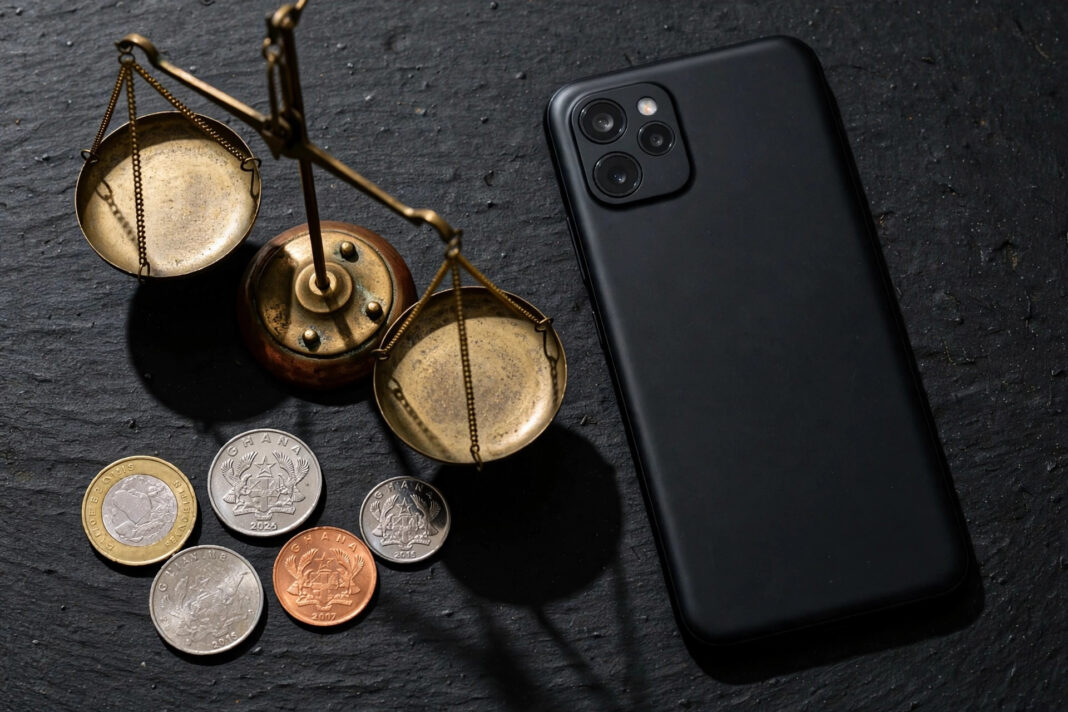

You apply for a small loan on your phone. You enter your name, your number, and your mobile money details. In seconds, the answer is no. No person looked at your file. No one will tell you why.
That is not only bad luck. It may be bias, built into the system that scored you. A loan app does not hate you. It learns from old data, and old data reflects old inequality. If the data it learned from favoured city workers with formal jobs and expensive phones, it will favour people like them again, and it will do it at scale, in seconds, without ever meeting you.
This guide explains how that happens in Ghana, who is most likely to be treated unfairly, what the law actually gives you, and what to do after a no. It does not accuse any named lender of bias. No public audit of a Ghanaian loan app’s model has been published that we could find, so no app is named here as biased. The risk is structural, and it is real even when no one intended it.
What Is Actually Happening
A digital lender does not use a loan officer in the old sense. When you apply, a system scores you. It looks at hundreds of pieces of information, often called alternative data, because many applicants have no formal credit history. That can include your mobile money transaction history, your call and message patterns, how you use apps on your phone, your location, and the type of phone you use.
The system gives you a risk score. A high score means approved, often at a lower interest rate. A low score means declined, or offered a loan at a very high price. In many cases no human reviews the file. The algorithm is the decision.
That speed is the attraction. A person who needs money for stock, for school fees, or for an emergency can get an answer in minutes, without a queue, without a guarantor, and without a bank branch. It is also the danger. A fast decision that is wrong is still wrong, and it is harder to challenge, because there is no person to ask.
The Bank of Ghana has been cleaning up this market. Its Directive for Digital Credit Service Providers in Ghana, issued in September 2025, sets the rules for digital lenders, and it took effect on 1 November 2025. Existing providers had to regularise by 30 June 2026. Since then the Bank has named unlicensed loan apps in a series of public notices. The most recent, Notice No. 45, dated 17 November 2026, named another 20 apps, including Cedi Trust, CediCredit, Pulse Cash, and Sika Prime, and warned the public not to engage with unlicensed providers. The Bank said those operations involve significant violations of customer data privacy, consumer protection, and regulatory standards.
Licensed or not, the scoring question remains. A licensed lender can still use a biased system. A licence means the firm is allowed to lend. It does not mean its algorithm is fair.

How Bias Enters the System
Bias enters in three places, and none of them needs a person to be prejudiced.
First, the training data. A system learns from past lending. If past lending favoured urban men with formal jobs and bank accounts, the system will learn that pattern as normal. In Ghana, women, rural residents, informal traders, and people without a formal bank account have historically had less access to credit. A system trained on that history will repeat it, not correct it.
Second, the proxy data. A system rarely uses gender or region directly. It uses things that stand in for them. The type of phone you use, the area you live in, the hours you are active, the contacts in your phone, and the size of your mobile money transactions can all act as proxies. A budget phone, a rural location, or a thin mobile money history can lower your score, even if you repay every loan you take. The system does not know why you have a budget phone. It only knows that people with that phone, in its old data, repaid less often.
Third, the feedback loop. If you are declined, you get no loan, so you build no repayment history. The next time you apply, your file is still thin, so you are declined again. The system was right, in its own terms, because it predicted you would not repay, and it never gave you the chance to prove otherwise. People who are approved build a history, get better terms, and are approved again. The gap widens with each round.
Research from elsewhere in Africa shows this is not only theory. Research on Kenyan digital lending platforms found that loan approval algorithms displayed gender bias, with women more likely to be rejected or offered less favourable terms, because the models relied on data that reflected existing social and economic inequality. That is Kenya, not Ghana, and it is not proof about a Ghanaian app. It is evidence that the mechanism is real, and that it hits women and informal workers first.
There is also academic work that used a Ghana loan dataset to test how large language models make loan decisions. It found that the fairness of the decision changed with how the data was presented to the model. That is a research finding about models in general, not a finding about a live Ghanaian lender. It is included here to show that the way a system is built changes who it favours, and that fairness is not automatic.
The honest limit is this. No Ghanaian loan app has published its model, its training data, or its fairness tests, as far as we could find. Without that, no one outside the lender can say how much bias is in a particular system. What we can say is how bias enters, who it is likely to hit, and what to do about it.

Who Is at Risk
Everyone who applies through an app is affected, because the decision is automated. But some people face a higher risk of an unfair no.
Women are at higher risk, because they have historically held fewer formal bank accounts and less formal credit history, so a system trained on old data has less to learn from about them, and what it has learned may be worse.
Rural residents are at higher risk, because location, network coverage, and transaction patterns can act as proxies for where a person lives, and a system may score a rural applicant lower without ever asking about their income.
Informal workers are at higher risk. A trader, a driver, a seamstress, or a farmer may earn well and repay reliably, but if their income does not pass through a formal salary account, a system that looks for a salary may miss it.
People with a budget phone or a thin digital footprint are at higher risk. A system that uses phone type or app use as a signal will score them lower, even when the phone has nothing to do with whether they repay.
People who borrow from unlicensed apps face a different risk as well. The Bank of Ghana has warned that unlicensed providers violate data privacy and consumer protection standards. Their systems may take your contacts and your data, share them, and use them to shame you into paying. That is not bias. It is abuse, and the first step is not to borrow from them at all.
What Ghanaian Law Says
Ghana has no dedicated AI law as of November 2026. What applies is the Data Protection Act, 2012 (Act 843), the Bank of Ghana’s digital credit rules, and the National AI Strategy, which is a plan, not a law.
Section 41 of Act 843 is the part that matters most here, and it needs to be stated honestly, with its limit. The section is titled “Rights in relation to automated decision-taking.” It says that if a decision that significantly affects you is based solely on automatic processing, the organisation must tell you as soon as reasonably practicable that the decision was taken on that basis. You can then, by notice in writing, require the organisation to reconsider the decision within 21 days of receiving that notification, and the organisation must tell you in writing within 21 days what steps it intends to take to comply. If it does not comply, you can complain to the Data Protection Commission, which can order it to comply.
That sounds strong, and it is, but there is a limit in Section 41(4). The section does not apply to a decision made when considering whether to enter into a contract with you, or in the course of performing a contract. A loan decision is often made when a lender is considering whether to enter into a loan contract with you. That means the right may not apply to your application, even though the decision was fully automated.
That does not mean you should stay silent. Ask in writing anyway. Ask whether the decision was made solely by a machine, ask for the main reason, and ask for a human review. A lender that refuses to answer, or that cannot explain its decision, is giving you a record to take to the Data Protection Commission or to the Bank of Ghana. The Bank of Ghana’s Directive for Digital Credit Service Providers, issued in September 2025, requires licensed providers to follow data privacy and consumer protection standards, and the Bank has told the public to report unlicensed operators to its Fintech and Innovation Department, or by calling or texting the short code 292.
The Data Protection Bill, 2025, which would replace Act 843, went to public consultation in October 2025 and would keep rights on automated decisions, but it is not enacted. Until it is, Section 41, with its limit, is the law that applies.
The Bank of Ghana is also developing a Directive on the Use of Artificial Intelligence in the Financial Sector, announced on 8 October 2026. That directive is not yet published. When it is, it is likely to require banks and fintechs to govern their AI systems, test them for unfair treatment, and keep a person in charge of important decisions. Our first post today explains that directive in full.
Checklist: What to Do After a No
- Check the licence first, before you apply again. Verify that the lender is licensed by the Bank of Ghana, on the Bank’s official website, before you borrow. Do not borrow from an app on the Bank’s unlicensed lists. The most recent list, Notice No. 45, is dated 17 November 2026.
- Ask in writing whether a machine decided. Send a message or an email to the lender, and keep a copy. Ask three things: was the decision made solely by an automated system, what was the main reason for the decline, and can a person review it. Ask for the reply in writing.
- Ask for the data they used. Ask what information the score was based on, and whether any of it is wrong. A wrong phone number, a wrong address, or a mixed-up file can feed a wrong score. Correct what is wrong, in writing, and keep the correction.
- Keep everything. Save the application, the screenshots of the decline, the messages, the dates, and the lender’s replies. If you later complain to the Data Protection Commission or to the Bank of Ghana, that record is your evidence.
- Do not apply to ten apps at once. Each application can leave a trace, and a string of declines can make the next score worse. Compare two licensed lenders, apply to one, and wait for the answer before you try another.
- Complain if there is no answer. If the lender does not tell you whether the decision was automated, does not give a reason, or does not offer a human review, complain to the Data Protection Commission, and report an unlicensed lender to the Bank of Ghana. A complaint from one person is a record. A complaint from many people is a pattern.
Conclusion
A loan app can say no in seconds, and it can be wrong. It can be wrong because its data is old, because it uses a proxy that has nothing to do with whether you repay, or because it never gave you a chance to build a history.
You cannot see inside the system, and the lender will not show you. But you can ask the right questions, in writing, and keep the answers. Was it automated? What was the main reason? Can a person review it? Those three questions cost nothing, and they turn a silent no into a decision that someone has to defend.
The law gives you a limited right to ask for reconsideration, and the Bank of Ghana is writing a new AI rule that should make fairness a requirement, not a favour. Until that rule arrives, your record, your questions, and your complaint are your protection. Do not borrow from an unlicensed app, do not accept a no with no reason, and do not let one automated decision decide what you are worth.
Sources
- Bank of Ghana, Notice No. BG/GOV/SEC/2026/45, 17 November 2026, naming 20 unlicensed digital credit service providers (https://www.bog.gov.gh/wp-content/uploads/2026/11/Notice-No.45-BOG-SEC-GOV-2026-Notice-PUBLICATION-OF-UNLICENSED-DIGITAL-CREDIT-SERVICE-PROVIDERS-ON-THE-BANKS-WEBSITE-SOCIAL-MEDIA-PLATFORMS-AND-OTHER-COMM-CHANNELS-1.pdf). The notice says the apps operate without the requisite licence, in contravention of the Directive for Digital Credit Service Providers in Ghana (September 2025), and that their operations involve significant violations of customer data privacy, consumer protection, and regulatory standards.
- Bank of Ghana, Notice No. BG/GOV/SEC/2026/40, 2 November 2026, naming 20 unlicensed digital credit service providers (https://www.bog.gov.gh/wp-content/uploads/2026/11/Notice-No.40-BOG-SEC-GOV-2026-UNLICENSED-DIGITAL-CREDIT-SERVICES-PROVIDERS.pdf). Same Directive, same warning, an earlier list in the same series.
- Bank of Ghana, Directive for Digital Credit Service Providers in Ghana, September 2025, in effect 1 November 2025. Applications opened 3 November 2025; existing providers were required to regularise by 30 June 2026.
- Data Protection Act, 2012 (Act 843), Ghana. Section 41, Rights in relation to automated decision-taking: notice of a solely automated decision, right to require reconsideration within 21 days, reply in writing within 21 days, and the contract exemption in Section 41(4). Text checked against the Act itself.
- HiPipo Money, Guarding the Digital Commons: The Fight for Ethical AI and Data Privacy in African Finance, 15 July 2026 (https://www.money.hipipo.com/2026/07/15/guarding-the-digital-commons-the-fight-for-ethical-ai-and-data-privacy-in-african-finance/). Research on Kenyan digital lending platforms found gender bias in loan approval algorithms, with women more likely to be rejected or offered less favourable terms.
- Azime, Kanubala, Afonja and Fritz, Accept or Deny? Evaluating LLM Fairness and Performance in Loan Approval across Table-to-Text Serialization Approaches, 2025 (https://pdfs.assets.alphaxiv.org/2508.21512v1.pdf). Academic study using loan approval datasets from Ghana, Germany and the United States; found that how tabular data is presented to a language model changes both performance and fairness.
- Bank of Ghana, Remarks by Governor Dr Johnson Pandit Asiama, 43rd Annual General Meeting of the Ghana Association of Banks, 8 October 2026. Announcement that the Bank is developing a Directive on the Use of Artificial Intelligence in the Financial Sector.
- Ghana Beacon, Can AI Discriminate Against Consumers? The Hidden Danger of Algorithms, by Michael Abisa, 19 May 2026 (https://ghanabeacon.com/can-ai-discriminate-against-consumers). Fintech apps in Africa use alternative data such as mobile money transactions, smartphone use and location to assess credit, and opaque systems may deny loans without clear explanations.
